
Microsoft
has introduced two major artificial intelligence initiatives that signal a
significant shift in how people may interact with software in the years ahead.
Announced during the company's Build 2026 developer conference, Microsoft Scout
and Project Solara are designed around a future where AI agents operate
continuously in the background, handling tasks, gathering information, and
taking action across multiple services without requiring constant user input.
The
announcements reflect Microsoft's growing focus on agent-based computing, a
model that moves beyond traditional chatbot interactions and toward autonomous
systems capable of completing work on behalf of users. Instead of waiting for
instructions inside a chat window, these agents are intended to remain active,
monitor ongoing activities, and respond to changing situations as they occur.
Among the
announcements, Microsoft Scout emerged as one of the conference's most closely
watched launches. The company described Scout as a persistent personal AI
assistant that can operate across workplace applications and services. Unlike
conventional assistants that respond only when prompted, Scout is designed to
remain active throughout the workday, helping users manage schedules, organize
information, track communications, and coordinate tasks across different
software environments.
Demonstrations
presented during Build showed Scout handling multiple activities
simultaneously. The assistant can monitor emails, review conversations,
identify pending actions, assist with scheduling, and surface relevant
information when needed. Microsoft positioned the technology as part of a new
category of long running AI systems that can continue working even when users
are focused elsewhere.
At the core
of Scout is Microsoft's newly introduced MAI-Thinking-1 reasoning model,
developed internally to support more advanced decision making and multi step
task execution. The model is intended to provide the reasoning capabilities
required for autonomous agents that must interpret context, understand
objectives, and carry out actions across different environments.
Alongside
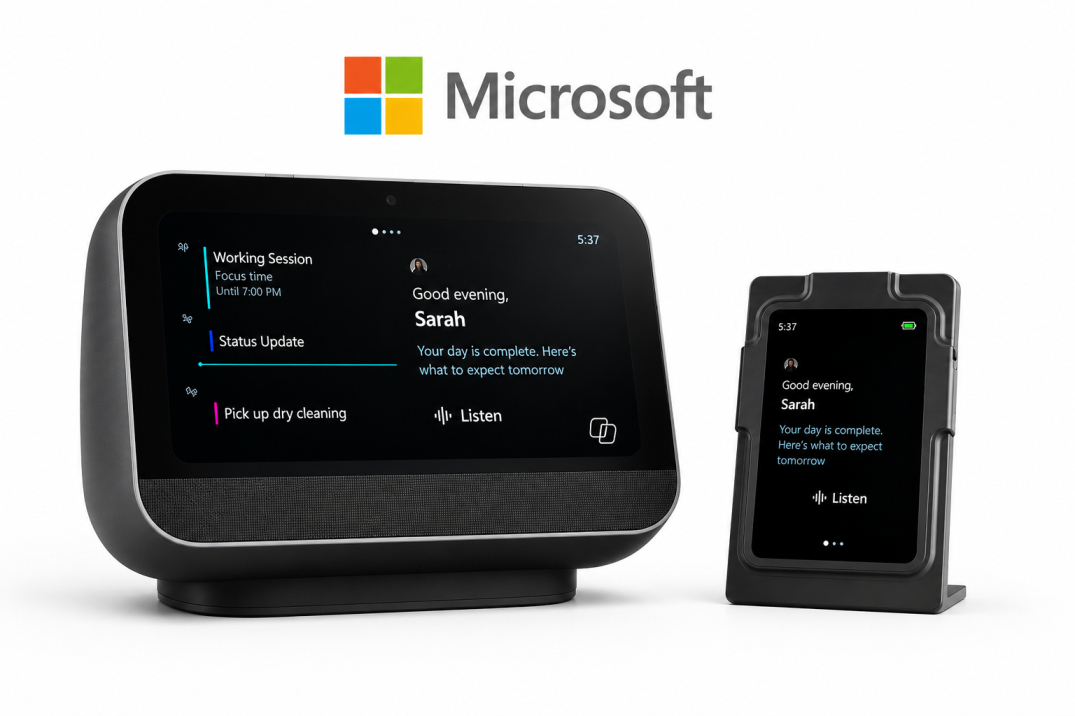
Scout, Microsoft unveiled Project Solara, a new Android based operating system
built specifically for AI agent devices. Rather than functioning as a
traditional mobile operating system centered around apps, Solara is designed
around AI agents as the primary interface. Microsoft described the platform as
a foundation for an "agent first" computing experience in which users
interact with intelligent systems that can retrieve information, coordinate
services, and complete actions directly.
During the
conference, Microsoft showcased several prototype devices powered by Project
Solara. These included a desk based device and a wearable badge style device
equipped with sensors, cameras, microphones, and biometric security features.
The prototypes illustrated how AI agents could operate across different
hardware formats beyond smartphones, tablets, and personal computers.
According to
Microsoft, Project Solara is intended to create a continuous connection between
users and their AI assistants. The platform is designed to allow agents to move
across devices, maintain context, and continue tasks regardless of where
interactions begin. This approach aims to reduce dependence on individual
applications and create a more unified digital experience.
The company
also highlighted partnerships with semiconductor firms to support the new
platform and demonstrated how cloud services would work alongside local
hardware to power agent driven experiences. The broader goal is to establish a
flexible ecosystem where developers can build specialized AI agents for
different industries and use cases.
Taken
together, Scout and Project Solara represent Microsoft's clearest indication
yet that the next stage of artificial intelligence may revolve less around
asking questions and more around delegating work. Rather than serving as tools
that wait for commands, AI systems are increasingly being developed to observe,
reason, and act continuously in the background. With these launches, Microsoft
is positioning itself at the center of that transition as agent based computing
begins to move from concept to product reality.
.jpg)

Comments
Loading comments...
Leave a Comment