

Google’s AI coding platform Antigravity has introduced a new Gemini 3.5 Flash Low model designed to reduce token usage and improve efficiency for developers working on lightweight software engineering tasks.
The update
marks the latest expansion of Antigravity, the DeepMind backed AI coding
platform launched in late 2025 as competition intensifies across the rapidly
growing AI assisted software development market.
Antigravity
lead builder Varun Mohan announced the rollout this week, revealing that Gemini
3.5 Flash Low generates roughly 45 percent fewer tokens compared to the
platform’s existing Gemini 3.5 Flash Medium model while still outperforming the
older Gemini 3 Flash system on several software engineering benchmarks.
The move
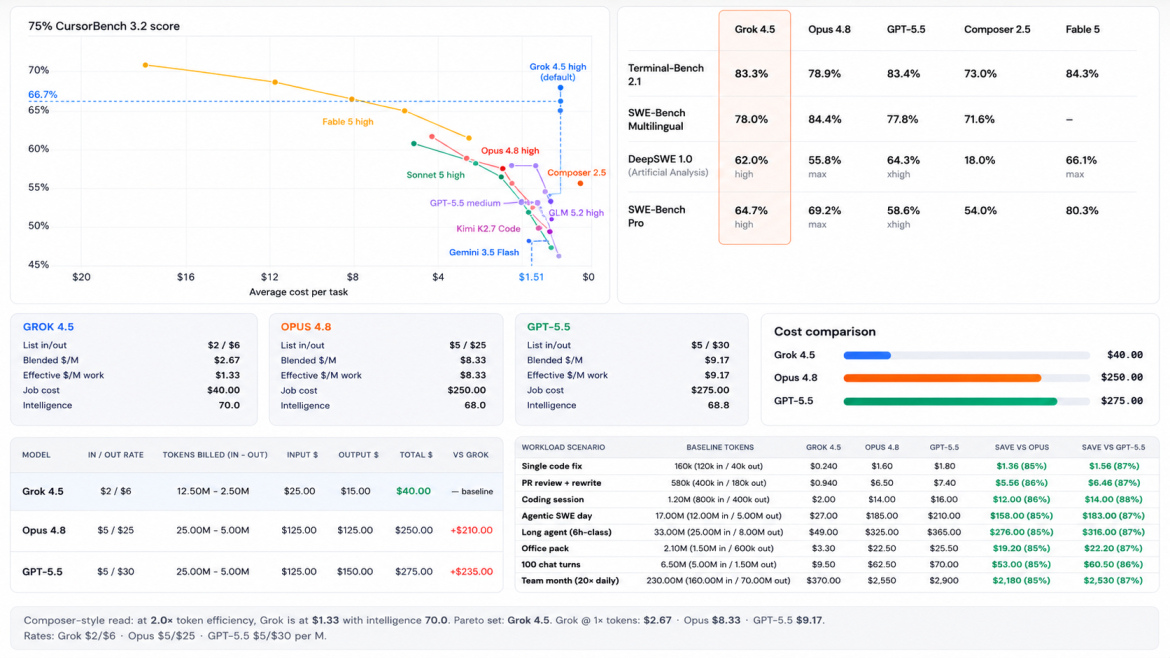
comes after users repeatedly raised concerns about high token consumption, API
costs, and resource efficiency while using larger coding models for simpler
development tasks.
According to
Mohan, the new Flash Low model is optimized for lightweight coding workflows,
debugging, autocomplete assistance, and basic engineering operations where
developers may not require the heavier reasoning capabilities of larger AI
systems.
The company
also confirmed that quotas have been reset across all paid Antigravity plans
following the update.
The rollout
quickly generated discussion across developer communities, particularly among
users looking for lower cost AI coding solutions as model usage expenses
continue rising across the industry.
Several
developers praised the platform’s rapid response to community feedback
regarding token efficiency and practical workflow optimization.
AI builder
Anshul Ramachandran described the new model as useful for handling routine
coding tasks while reserving more advanced models for complex engineering
problems, allowing teams to scale AI usage more efficiently across projects.
The launch
reflects a broader shift happening inside the AI industry as companies
increasingly focus not only on model intelligence, but also on operational
efficiency, inference costs, speed, and scalability.
Over the
past year, AI coding platforms have rapidly evolved from simple autocomplete
assistants into fully integrated software engineering systems capable of
writing code, debugging applications, analyzing repositories, generating tests,
and handling multi step development workflows.
However,
growing usage has also exposed one of the industry’s biggest challenges:
computational cost.
Larger
reasoning models often consume massive token volumes even for relatively simple
development tasks, creating higher infrastructure costs for both providers and
users. This has pushed companies toward introducing smaller, faster, and more
resource efficient AI models designed for everyday workflows.
Gemini 3.5
Flash Low appears to target exactly that segment.
The model
joins Antigravity’s growing lineup of Flash Medium and Flash High systems,
giving developers more flexibility to balance performance, speed, and token
consumption depending on workload complexity.
Some users,
however, also questioned whether the lower token model could introduce
tradeoffs in reasoning quality, image handling capabilities, or advanced coding
performance during larger workflows.
The
discussion highlights an increasingly important trend across the AI sector
where efficiency is becoming nearly as valuable as raw intelligence.
As AI coding
adoption accelerates across startups, enterprise software teams, and
independent developers, platforms are now competing heavily on pricing
efficiency, latency reduction, workflow optimization, and scalable deployment
rather than benchmark scores alone.
For Google
and DeepMind, the Antigravity expansion represents another strategic move to
strengthen Gemini’s position inside the growing AI developer ecosystem, where
rivals including OpenAI, Anthropic, GitHub Copilot, and Cursor continue
competing aggressively for developer adoption.
The addition of Gemini 3.5 Flash Low also signals how AI coding tools are entering a new phase focused on practical daily usability, not just maximum capability, as developers increasingly demand systems that are faster, cheaper, and easier to scale across real world software projects.

.jpg)

Comments
Loading comments...
Leave a Comment