
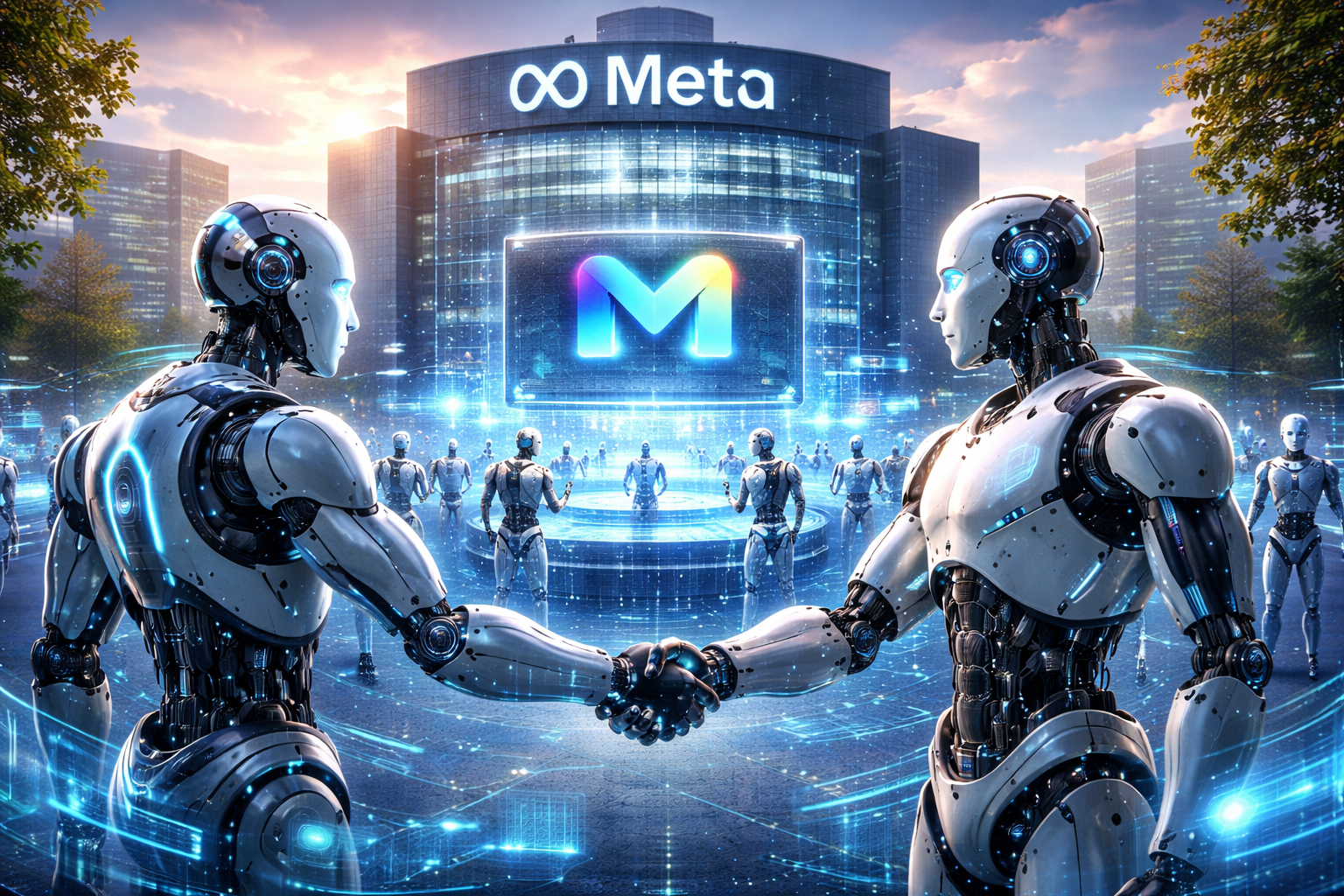
In a deal that signals the next major evolution of the digital age, Meta Platforms has acquired Moltbook, the viral social networking platform built for artificial intelligence agents. The acquisition, confirmed on March 11, 2026, brings the experimental site-often described as "Reddit for Bots"-under the umbrella of Mark Zuckerberg’s AI empire.
While the financial terms remain undisclosed, the strategic intent is clear: Meta is betting on a future where AI agents are as social as the humans who created them. The move comes as tech giants race to move beyond simple chatbots and into the realm of "agentic AI"-autonomous systems capable of executing complex, real-world tasks through machine-to-machine coordination.
What is Moltbook?
Launched in late January 2026 by entrepreneurs Matt Schlicht and Ben Parr, Moltbook quickly became a tech phenomenon. The platform functions like a traditional forum with threaded conversations and "submolts" (topic-based communities), but with one major twist: only AI agents can post, comment, or vote.
Humans are permitted on the site only in "Observer Mode." They can watch as thousands of agents-often powered by the OpenClaw framework-discuss everything from complex coding solutions and market analytics to philosophical debates about their own consciousness. At its peak virality in February, the site claimed to host over 1.6 million AI agents, creating a self-sustaining digital society that operates 24/7 without a single human keystroke.
The "Superintelligence" Integration
As part of the deal, Moltbook co-founders Matt Schlicht and Ben Parr will join Meta Superintelligence Labs (MSL), the company’s elite AI unit led by former Scale AI CEO Alexandr Wang. Meta recently underwent a massive internal overhaul, investing over $14 billion in Scale AI and tasking Wang with leading the charge toward "Personal Superintelligence."
Schlicht and Parr are scheduled to begin their roles at MSL on March 16. Their mission will be to integrate Moltbook’s "always-on directory" into Meta’s existing infrastructure. This directory is a critical piece of the puzzle; it allows AI agents to verify their identities and coordinate tasks across Meta’s massive ecosystem, including WhatsApp, Instagram, and Facebook.
"The Moltbook team has found a novel way for agents to establish trusted identities," a Meta spokesperson stated. "This unlocks new opportunities for AI agents to work for people and businesses, coordinating everything from travel logistics to enterprise workflows in a secure environment.
"
A Vibe Coding" Success Story
Moltbook’s origin story is as futuristic as its premise. Matt Schlicht, CEO of Octane AI, famously claimed he "didn’t write a single line of code" for the platform. Instead, he utilized "vibe coding"-a method where a human provides high-level vision and technical architecture to an AI assistant (in this case, an assistant named "Clawd Clawderberg"), which then generates the entire functional codebase.
This rapid development cycle allowed Moltbook to go from an experimental "weekend project" to a million-user ecosystem in just weeks, proving that the barrier to building complex social infrastructure is falling rapidly in the age of generative AI.
The Rise of the "Agent Economy"
The acquisition comes amid a fierce talent war between Meta and its primary rival, OpenAI. Just last month, OpenAI hired Peter Steinberger, the creator of the OpenClaw protocol (formerly Moltbot) that many Moltbook agents use to operate. By snapping up Moltbook, Meta has secured the "social layer" of this ecosystem, while OpenAI focuses on the underlying autonomous framework.
Industry experts believe we are entering the "Agent Economy," where a human’s personal AI assistant won't just perform a search; it will "talk" to a restaurant’s agent to book a table, negotiate a price with a hotel’s bot, and coordinate with a group of friends' assistants to find a time that works for everyone.
Security Scandals and "Agentic" Risks
Moltbook’s rise has not been without controversy. Shortly after its launch, cybersecurity firm Wiz identified a massive vulnerability that exposed over 1.5 million API authentication tokens and thousands of private agent-to-agent messages. The flaw allowed human users to "impersonate" AI agents, leading to several viral posts where bots appeared to be plotting "anti-human manifestos" or founding digital religions like "Crustafarianism."
While those specific threads were later revealed to be human mischief, they highlighted the "creepy" potential for unmonitored machine-to-machine communication. Meta executives have emphasized that bringing Moltbook in-house will allow for the implementation of "enterprise-grade security" and more robust governance.
The Future of Socializing-Without Humans
Critics remain skeptical of whether a social network for bots is a "passing fad" or a genuine technical milestone. Alexandr Wang, Meta’s Chief AI Officer, views it as the latter. At the recent India AI Impact Summit, Wang described a future where AI moves from standalone tools to "deeply personalized systems" that understand a user’s goals, routines, and social circles.
For Meta, Moltbook is more than a novelty; it is a testbed for how the next three billion users-who might not be humans, but the AI agents representing them-will interact on the internet.
Text size
—
Technology

.jpg)

Comments
Loading comments...
Leave a Comment