

Elon Musk’s artificial intelligence startup xAI marked its third anniversary this week, highlighting rapid progress in building large-scale AI systems and infrastructure as competition intensifies among global technology companies racing to develop advanced artificial intelligence.
Founded on
March 9, 2023, the company has positioned itself as one of the most aggressive
new entrants in the AI sector. Over the past three years, xAI has expanded
rapidly through large-scale infrastructure investments, new AI models, and
significant funding rounds aimed at accelerating development of its Grok
chatbot and related technologies.
The
anniversary comes at a time when AI development is increasingly dominated by
large computing systems, massive data centers, and billions of dollars in
investment as companies attempt to push the boundaries of machine intelligence.
Massive
AI Infrastructure Expansion
One of the
most significant milestones in xAI’s growth has been the creation of its large
AI training system known as Colossus, located in Memphis, Tennessee. The
supercomputer was designed to train the company’s AI models, including the Grok
series of chatbots that compete with systems developed by companies such as
OpenAI and Google.
Colossus was
initially launched in 2024 using tens of thousands of Nvidia GPUs, and the
system has since expanded significantly as xAI scales its computing capacity.
The facility was built rapidly, with construction beginning shortly after the
project was conceived and moving at a pace far faster than typical data-center
deployments.
In recent
months, the company has continued expanding the site by acquiring additional
buildings near the Memphis facility to increase computing power and training
capacity. Industry reports indicate the expansion could eventually support
hundreds of thousands of graphics processing units used for AI training
workloads.
Such
large-scale computing clusters have become a central battleground in the global
AI race. Training modern AI models requires enormous processing capacity, and
companies are investing heavily in GPU infrastructure to support increasingly
complex systems.
Funding
Fuels Rapid Growth
The
company’s rapid expansion has been supported by large investment rounds from
global financial and technology partners. In early 2026, xAI secured $20
billion in funding, one of the largest financing rounds in the history of
artificial intelligence startups.
The funding
round attracted major institutional investors and strategic technology
partners, including firms linked to large-scale computing infrastructure and
semiconductor development.
Analysts say
the scale of the funding underscores growing investor confidence in the
long-term economic potential of artificial intelligence systems.
The capital
is expected to be used primarily to expand computing infrastructure, develop
new AI models, and accelerate research into advanced machine intelligence.
The scale of
the investment also highlights the increasing financial intensity of the AI
industry, where building competitive models now requires billions of dollars in
hardware, data, and engineering resources.
Grok AI
and the Competitive Landscape
Central to
xAI’s strategy is its flagship AI assistant Grok, which was first
introduced as a conversational AI system integrated with the social media
platform X, formerly known as Twitter.
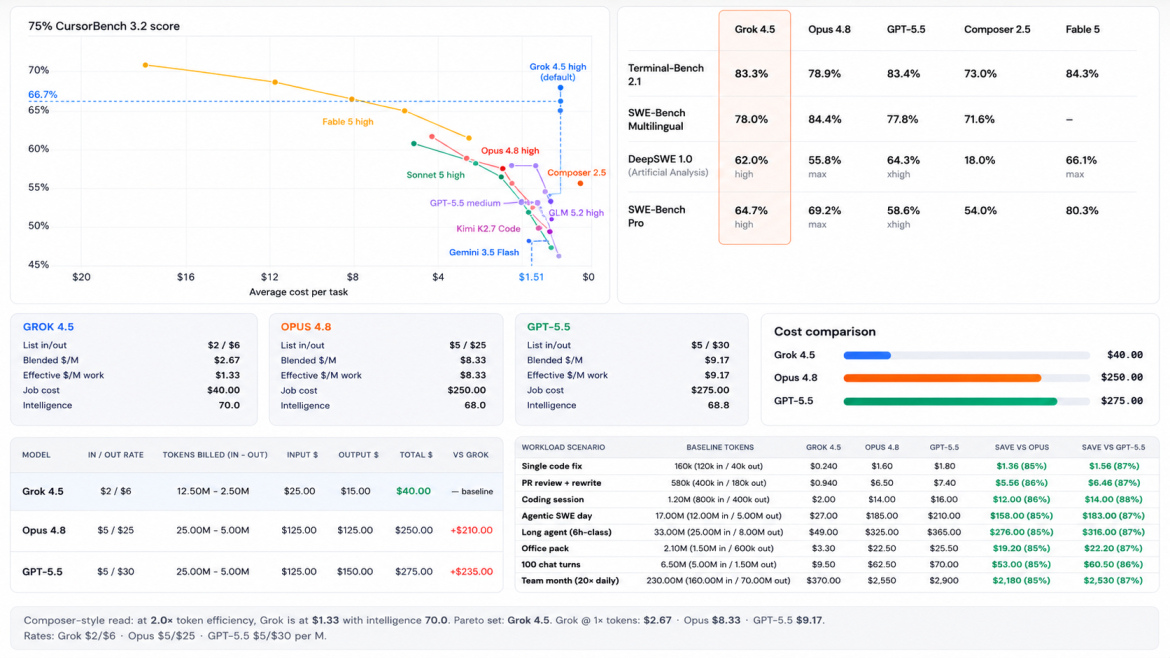
The latest
version of the system, Grok-3, was developed using xAI’s expanding large-scale computing infrastructure and was designed to compete with other leading AI assistants in
reasoning, coding, and general problem-solving tasks.
Grok’s
development reflects the broader competition between AI companies seeking to
create increasingly capable digital assistants that can handle complex queries,
generate code, analyze data, and assist with professional workflows.
The company
has emphasized that its long-term mission is to develop artificial intelligence
capable of helping humanity understand complex scientific questions and expand
knowledge about the universe.
Integration
With Musk’s Technology Ecosystem
Another
distinctive feature of xAI’s strategy is its integration with other companies
in Elon Musk’s technology portfolio.
The AI
startup has worked closely with the social media platform X, which provides
large volumes of real-time user-generated data that can be used to train and
refine AI systems.
Industry
observers say the combination of social media data, large-scale computing
infrastructure, and significant funding could provide xAI with advantages as
the competition for AI leadership intensifies.
At the same
time, the company faces strong competition from established AI developers
including OpenAI, Google DeepMind, Anthropic, and several emerging startups
that are also investing heavily in AI research.
Growing
Global AI Competition
The broader
AI industry has entered a period of rapid expansion over the past several
years, driven by breakthroughs in large language models and generative AI
systems.
Companies
around the world are now racing to develop increasingly powerful AI assistants
capable of supporting tasks such as writing, programming, research, and data
analysis.
As AI models
grow larger and more sophisticated, the infrastructure required to train them
has also expanded dramatically.
Data centers
capable of supporting hundreds of thousands of GPUs are becoming a defining
feature of the next phase of AI development.
Industry
analysts say this shift has turned the AI race into a competition not only for
talent and algorithms but also for access to large-scale computing resources.
The Road
Ahead for xAI
Three years
after its launch, xAI has established itself as a major player in the rapidly
evolving AI landscape.
The
company’s aggressive investment in computing infrastructure, combined with its
expanding AI models and growing ecosystem, has positioned it as a serious
competitor to other leading AI developers.
However, the
AI sector remains highly competitive, with multiple companies racing to build
increasingly powerful systems.
OpenAI’s
ChatGPT, Google’s Gemini, and Anthropic’s Claude continue to dominate
significant portions of the AI assistant market, while new startups and
research groups are introducing alternative approaches to AI model development.
For now,
xAI’s third anniversary serves as a milestone marking the company’s rapid rise
in one of the most transformative technological races of the modern era.
As global investment in artificial intelligence continues to accelerate, the coming years are expected to determine which companies ultimately lead the next generation of intelligent computing systems.

.jpg)

Comments
Loading comments...
Leave a Comment