
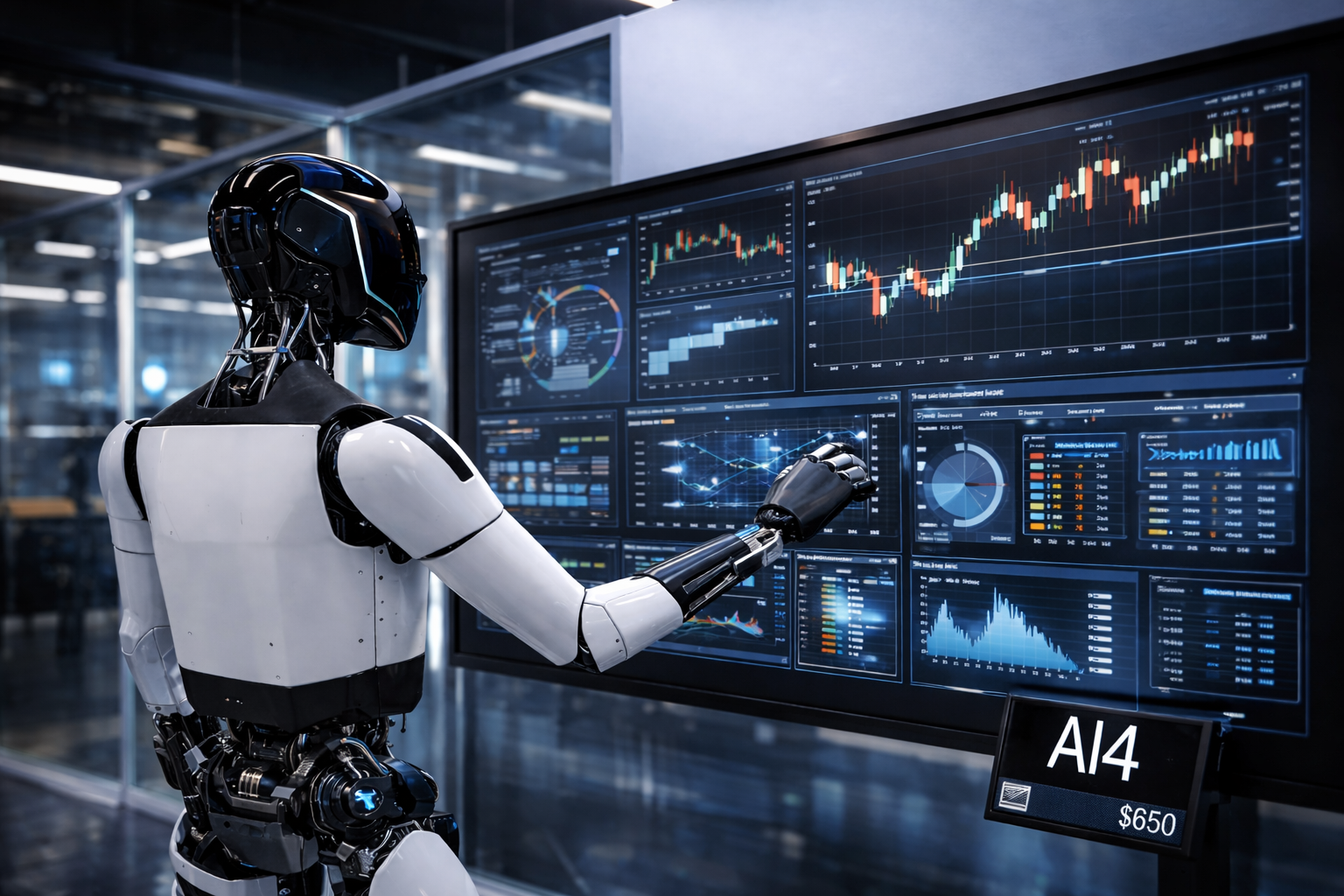
A new
artificial intelligence initiative informally referred to as “Macrohard”
is drawing attention across the technology industry after details emerged
suggesting the system could automate complex computer workflows traditionally
handled by human employees.
The project,
associated with technology entrepreneur Elon Musk, combines artificial
intelligence systems from xAI with hardware and robotics technologies developed
by Tesla. According to descriptions shared in recent discussions among
technology observers and developers, the system is designed to operate software
interfaces in real time by controlling keyboards, mouse inputs, and digital
workflows much like a human user.
If fully
realized, the architecture could represent a new phase in so-called “agentic
AI,” where artificial intelligence systems perform multi-step tasks across
applications rather than simply generating text or recommendations.
A
Dual-System Architecture
At the core
of the project is a design inspired by psychologist Daniel Kahneman’s
dual-process theory, which divides human thinking into fast reflexive responses
and slower analytical reasoning.
The
Macrohard concept reportedly mirrors this structure through two AI layers. The
first layer functions as a rapid-response system capable of analyzing recent
screen activity and immediately executing commands through keyboard and mouse
inputs. This reflexive layer acts as the operational interface, interacting
directly with software environments.
The second
layer serves as the reasoning engine. Built around the large language model
technology behind Grok, it operates as a higher-level planning system. In this
configuration, the reasoning engine interprets tasks, generates strategies, and
instructs the lower-level automation layer on how to complete them.
Developers
familiar with the concept describe the setup as a digital equivalent of a human
using a computer. Rather than rewriting applications or integrating through
software APIs, the AI interacts with programs visually, interpreting the screen
and executing commands as a user would.
This
approach could allow the system to function across a wide variety of software
platforms without requiring extensive custom integrations.
Hardware
Built Around Tesla’s AI4 Chip
A key
component of the system is the computing hardware designed to support the
automation layer. The architecture reportedly relies on the AI4 chip,
part of Tesla’s Hardware 4.0 platform originally developed for autonomous
driving capabilities.
The chip,
estimated to cost around $650 to manufacture, provides local computing power
capable of running advanced neural network models without relying entirely on
large external data centers.
Supporters
of the concept argue that this lower hardware cost could make large-scale
deployment of AI agents economically viable. By performing many tasks locally,
the system could reduce dependence on expensive infrastructure such as high-end
AI accelerators typically used in cloud computing.
Musk has
also suggested that the distributed network of vehicles produced by Tesla could
eventually play a role in AI computation. When vehicles are parked and not in
use, their onboard hardware could theoretically contribute processing power to
a shared network.
While the
feasibility of such a distributed computing model remains uncertain, it
reflects a broader effort to explore alternatives to centralized AI
infrastructure.
Aiming to
Automate Software Work
The broader
objective behind the Macrohard initiative is to automate complex knowledge work
that currently requires human interaction with digital tools.
Unlike
standard chatbots or coding assistants, the proposed system is intended to
function as a complete software operator capable of navigating interfaces,
executing workflows, and managing multi-step processes.
In theory,
this could enable the automation of tasks across various corporate departments.
Activities such as software testing, data processing, report generation,
customer service workflows, and even project management could be handled by AI
systems that operate software environments directly.
Advocates of
the approach argue that software companies may be particularly vulnerable to
automation because their work is already performed entirely through digital
interfaces.
However, experts
caution that replicating human decision-making and contextual judgment within
complex business processes remains a significant technical challenge.
Corporate
Links Between Tesla, xAI, and SpaceX
The
Macrohard concept also reflects the increasingly interconnected structure of
Musk’s technology companies.
Earlier in
2026, Tesla reportedly invested approximately $2 billion into xAI to support
artificial intelligence development initiatives. The move followed a series of
collaborations between the two organizations involving machine learning
infrastructure and robotics technologies.
In parallel,
SpaceX completed an all-stock acquisition of xAI, creating a combined entity
valued at more than $1.25 trillion according to estimates circulated among
industry analysts.
The growing
integration between these companies has raised questions about how AI
development resources are being shared across the ecosystem of Musk-led
ventures.
Some Tesla
investors have expressed concern that internal technology capabilities could be
redirected toward projects outside the company’s core automotive business.
Legal
filings submitted by several shareholders allege that Tesla’s artificial
intelligence expertise and hardware infrastructure may be increasingly
leveraged to support private ventures associated with Musk’s broader technology
portfolio.
Tesla has
not publicly responded in detail to those claims.
A New
Phase of Agentic AI
The
emergence of projects like Macrohard reflects a broader shift in the artificial
intelligence sector toward systems capable of executing real-world tasks.
Many current
AI tools focus primarily on generating text, images, or code. The next
generation of AI development, often referred to as agentic AI, aims to
create systems that can independently complete multi-step workflows.
Technology
companies across the industry are experimenting with similar ideas, including
AI agents capable of navigating websites, interacting with enterprise software,
or coordinating complex processes across digital platforms.
Whether
these systems can reliably replicate human workflows at scale remains an open
question. Software environments often contain edge cases, unpredictable
variables, and contextual nuances that are difficult for automated systems to
interpret.
Still,
interest in agent-based automation continues to grow as businesses seek ways to
increase efficiency and reduce operational costs.
Industry
Watching Closely
For now,
Macrohard remains more a concept than a widely deployed product. Few technical
details have been formally published, and many aspects of the architecture
remain speculative.
However, the
idea has already sparked discussion across technology communities about the
future of digital work.
If systems
capable of fully operating software environments become reliable, they could
dramatically change how companies approach tasks traditionally handled by
white-collar employees.
At the same
time, such developments raise broader questions about workforce disruption,
corporate governance, and the concentration of technological power among a
small number of AI developers.
For
technology leaders and policymakers alike, the emergence of advanced AI agents
suggests that the next stage of artificial intelligence may extend far beyond
generating content.
Instead, it may increasingly focus on performing the work itself.
.jpg)
Comments
Loading comments...
Leave a Comment