
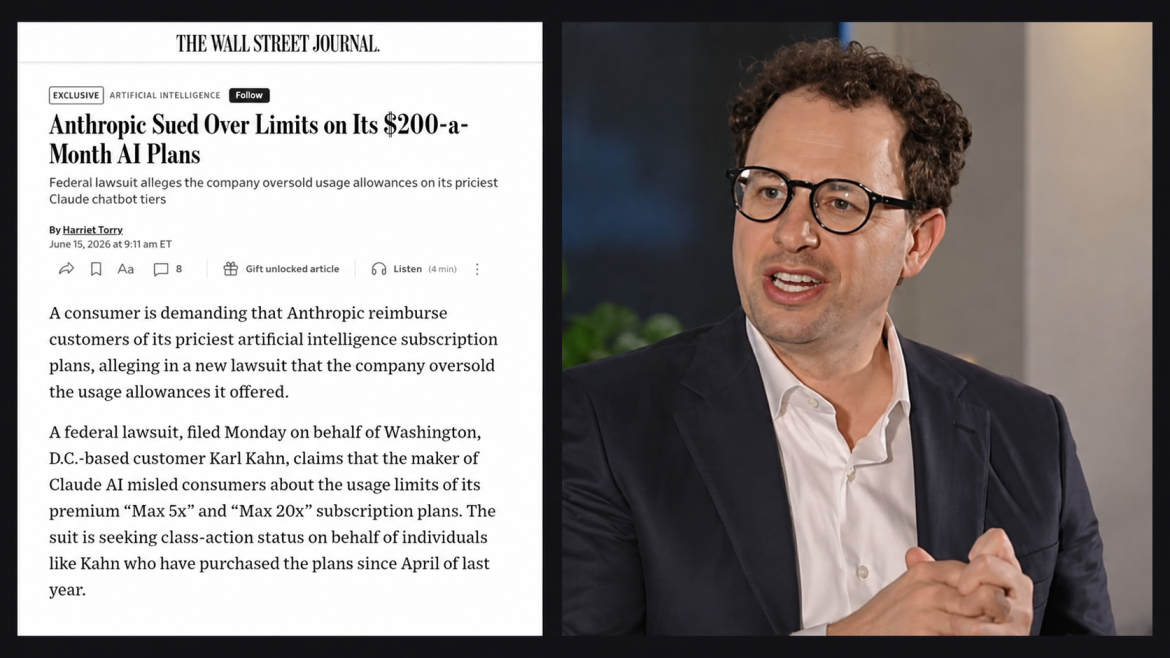
Artificial intelligence company Anthropic is facing a federal class-action lawsuit after a customer accused the company of misleading subscribers about the actual usage available under its premium AI plans.
The lawsuit, filed in a United States federal court on Monday, alleges that Anthropic's high-tier subscription offerings provide significantly less access than customers were led to expect through the company's marketing materials. The legal challenge centers on the company's Max 5x and Max 20x subscription plans, which are promoted as offering substantially expanded usage compared to standard service levels.
According to court filings, the plaintiff claims he reached approximately 15 percent of his weekly usage allowance during a single five-hour work session. The lawsuit argues that the actual availability of AI usage under the premium plans falls well below what consumers would reasonably interpret from the advertised service descriptions.
The complaint alleges that subscribers pay higher monthly fees expecting extensive access to Anthropic's AI models, only to encounter usage restrictions sooner than anticipated. The plaintiff contends that the company's marketing creates an impression of significantly expanded capacity that does not align with real-world usage experiences.
The case seeks class-action status, which would allow other customers who purchased the affected subscription plans to join the lawsuit if the court approves the request. The filing accuses Anthropic of engaging in deceptive marketing practices and claims consumers may have paid for services that did not match promotional representations.
The legal action arrives at a time when competition among AI companies is intensifying. Providers are increasingly introducing premium subscription tiers designed for developers, researchers, businesses and power users who require higher usage limits and access to advanced models. As demand for AI tools continues to grow, transparency regarding usage caps, rate limits and service restrictions has become an increasingly important issue for customers.
At the center of the dispute is how AI companies communicate usage allowances to subscribers. Unlike traditional software subscriptions, AI services often operate under dynamic limits that can vary based on server demand, model complexity and system capacity. Critics argue that such limitations can be difficult for customers to understand when purchasing premium plans.
The lawsuit claims that consumers expect a straightforward interpretation of advertised usage levels and that any significant restrictions should be clearly disclosed before purchase. The plaintiff argues that subscribers should not have to discover practical limitations only after paying for higher-tier access.
Anthropic has not publicly responded in detail to the allegations contained in the lawsuit. The company has not admitted wrongdoing, and the claims remain allegations that will be examined through the legal process.
The dispute has already attracted attention across the technology sector, where subscription-based AI services have become a major source of revenue. The outcome of the case could influence how AI companies market premium plans and explain usage limits to customers in the future.
Legal experts note that consumer protection cases involving digital subscriptions often focus on whether marketing claims accurately reflect the experience an average customer can expect. If the lawsuit moves forward, the court will likely examine how Anthropic presented its subscription offerings and whether those representations could reasonably have led consumers to expect different levels of access.
As AI adoption continues to accelerate worldwide, the case underscores growing scrutiny of how technology companies communicate pricing, usage policies and service limitations. The lawsuit may become an important test of transparency standards in the rapidly expanding artificial intelligence industry.

.jpg)

Comments
Loading comments...
Leave a Comment