
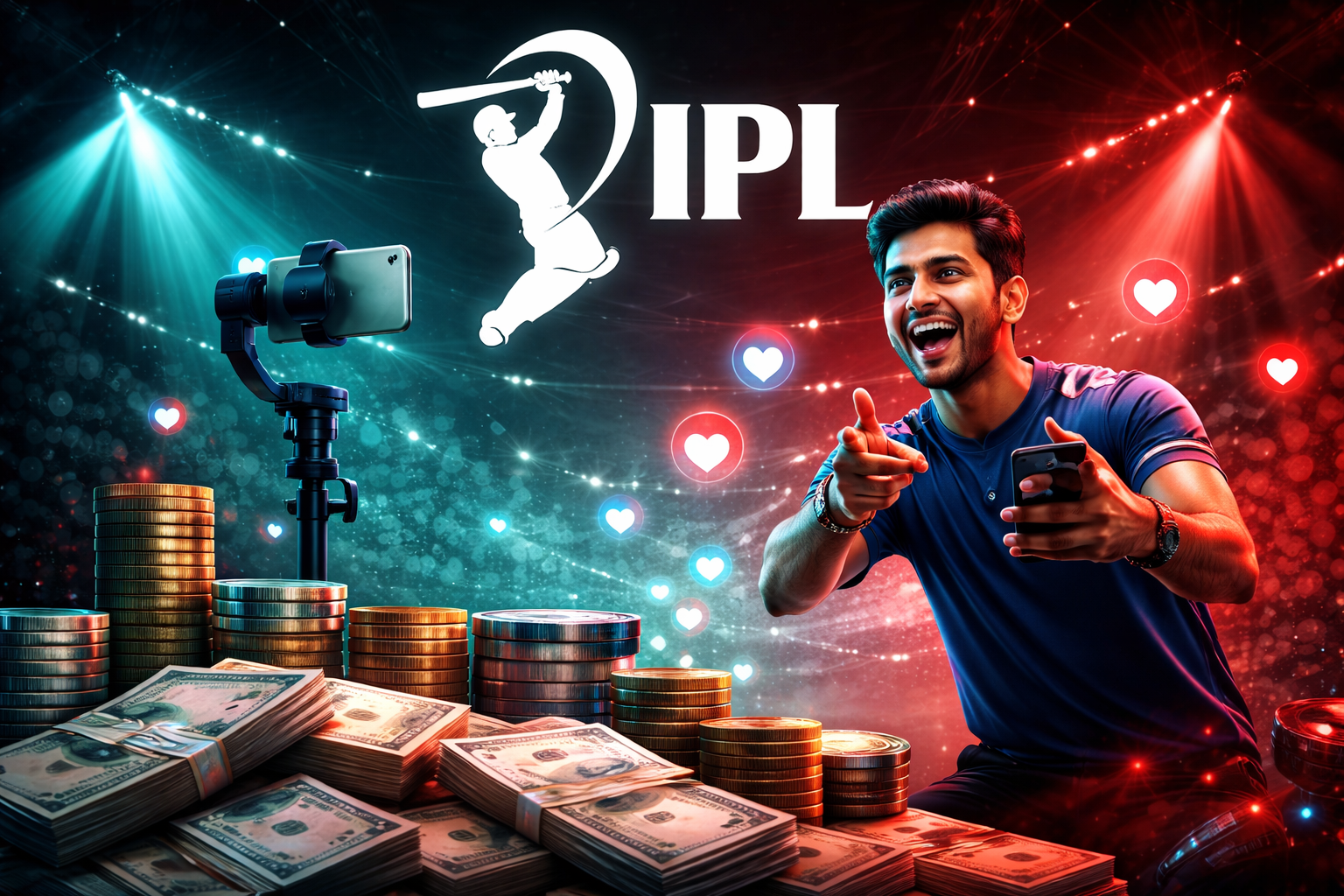
Influencer marketing around the Indian Premier League (IPL) is projected to cross ₹700 crore in 2026, underscoring the growing dominance of creator-led campaigns in India’s rapidly evolving digital advertising landscape, according to industry estimates and recent marketing reports.
The surge
reflects a sharp increase from previous seasons, where brands allocated
approximately ₹550 crore toward influencer collaborations during IPL 2025,
highlighting a year-on-year rise driven by social media engagement and shifting
consumer behavior.
As IPL
continues to attract massive viewership across television and digital
platforms, marketers are increasingly turning to influencers to capture
audience attention in real time, particularly among younger demographics.
Influencer
Marketing Becomes a Core IPL Strategy
The Indian
Premier League has long been one of the country’s largest advertising events,
with total ad revenues running into thousands of crores annually. Estimates
suggest IPL advertising revenues range between ₹4,900 crore and ₹7,000 crore,
depending on formats and platforms.
Within this
massive ecosystem, influencer marketing is emerging as a key pillar of brand
strategy.
Industry
data indicates that influencer-led campaigns now account for a growing share of
total IPL marketing spends, with some estimates suggesting that such campaigns
contribute 15–25 percent of overall brand marketing activity during the
tournament.
The
projected ₹700 crore mark for 2026 signals not just incremental growth, but a
structural shift in how brands approach sports marketing in the digital era.
Why
Brands Are Increasing Influencer Spend
Marketing
experts attribute the rise in influencer investment during IPL to three key
factors: audience fragmentation, authenticity, and real-time engagement.
Unlike
traditional advertising formats such as television commercials, influencer
campaigns allow brands to integrate messaging seamlessly into ongoing
conversations on platforms like Instagram, YouTube, and X.
The IPL’s
real-time nature creates constant spikes in online activity, as fans react to
match moments, share opinions, and consume related content throughout the
tournament.
Influencers
play a critical role in amplifying these conversations.
During IPL
2024 alone, influencer-driven content generated hundreds of thousands of
posts and billions of engagements, reflecting the scale at which
creator-led campaigns can reach audiences.
This level
of engagement is difficult to achieve through traditional advertising alone.
Rise of
Regional and Micro Influencers
Another
major driver behind the surge in influencer marketing is the increasing
importance of regional content creators.
Reports
indicate that content produced in regional languages often generates higher
engagement than English-language content, particularly among audiences in
Tier 2 and Tier 3 cities.
Brands are
therefore shifting away from relying solely on celebrity endorsements and are
instead collaborating with micro and regional influencers who can connect more
directly with specific communities.
These
creators are seen as more relatable and authentic, making their recommendations
more effective in influencing purchasing decisions.
Industry
analysts note that this trend has significantly expanded the influencer
ecosystem, allowing smaller creators to play a larger role in major marketing
campaigns.
Key
Sectors Driving IPL Influencer Spend
Several
industries are expected to dominate influencer marketing investments during IPL
2026.
Based on
recent trends, the leading sectors include:
- Entertainment and streaming
platforms
- Fast-moving consumer goods
(FMCG)
- Consumer electronics
- E-commerce and
direct-to-consumer (D2C) brands
- Automotive companies
These
sectors are leveraging influencer campaigns not only to build brand awareness
but also to drive measurable outcomes such as app downloads, product purchases,
and user engagement.
In many
cases, influencer marketing is being integrated with performance-based models,
where compensation is tied to conversions rather than impressions.
Social
Media and Second-Screen Behavior
The growth
of influencer marketing during IPL is closely tied to changes in how audiences
consume content.
Viewers are
no longer limited to watching matches on television. Instead, they engage with
multiple screens simultaneously, streaming matches, browsing social media, and
interacting with content in real time.
This
“second-screen” behavior has transformed IPL into a digital-first event.
Social media
platforms become hubs of activity during matches, with fans sharing reactions,
memes, and highlights instantly.
Influencers
act as intermediaries in this ecosystem, shaping conversations and extending
the reach of brand campaigns beyond traditional media.
Influencer
Marketing Industry Expands Rapidly
The surge in
IPL-related influencer spending is part of a broader expansion of India’s
influencer marketing industry.
According to
industry reports, the sector is expected to reach approximately ₹3,375 crore
by 2026, growing at a steady pace as brands increasingly prioritize digital
engagement.
This growth
reflects a wider shift in marketing strategies, where trust and relatability
are becoming more important than traditional advertising reach.
Consumers
are more likely to engage with content that feels authentic, and influencers
are uniquely positioned to deliver that experience.
Challenges
and Risks
Despite its
rapid growth, influencer marketing also presents challenges.
One of the
primary concerns for brands is measuring return on investment (ROI). While
engagement metrics such as likes, shares, and comments provide some indication
of performance, translating these into actual sales remains complex.
There are
also risks associated with brand safety and content quality.
Poorly timed
or insensitive posts during high-profile events like IPL can lead to backlash,
potentially damaging a brand’s reputation.
As a result,
companies are investing in more structured influencer strategies, including
content guidelines, approval processes, and performance tracking systems.
Future
Outlook
The
projection of ₹700 crore in influencer marketing spend during IPL 2026
highlights the growing importance of creators in India’s advertising ecosystem.
As digital
platforms continue to evolve and audience behavior shifts further toward online
engagement, influencer marketing is expected to play an even larger role in
future IPL seasons.
Marketing
experts believe that the next phase of growth will be driven by data-driven
campaigns, AI-powered analytics, and deeper integration between brands and
creators.
For now, IPL
remains one of the most powerful platforms for brands to experiment with these
strategies at scale.
The rise of
influencer marketing during IPL reflects a broader transformation in how brands
connect with audiences in the digital age.
What was
once a supplementary marketing channel has now become a central component of
advertising strategy, particularly during high-engagement events like the
Indian Premier League.
With spending expected to cross ₹700 crore in 2026, influencer marketing is no longer just a trend, it is a defining force shaping the future of sports marketing in India.

.jpg)

.jpg)
Comments
Loading comments...
Leave a Comment