
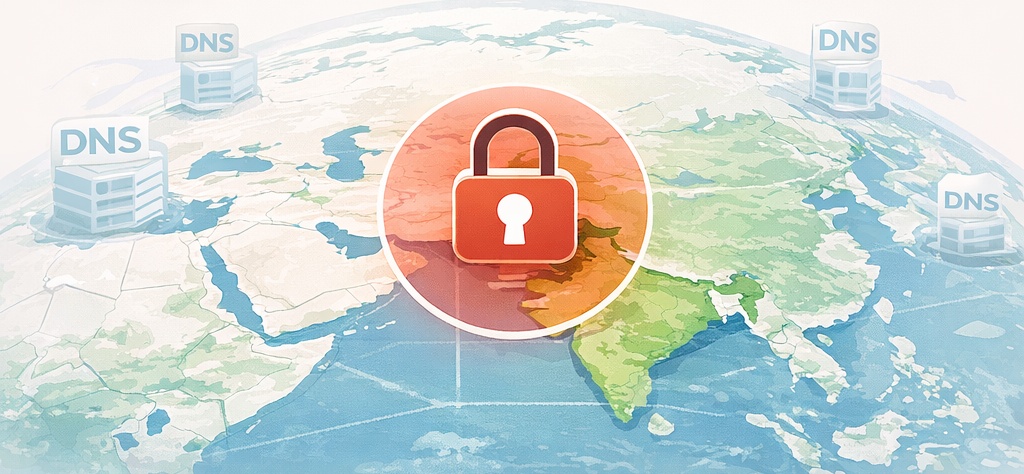
India has
restricted access to Supabase, a widely used open-source backend-as-a-service
platform, following a government order issued under Section 69A of the
Information Technology Act, causing widespread connectivity issues across major
internet service providers and raising concerns within the developer community.
The
restriction, which began earlier this week, has led to DNS-level disruptions on
several major broadband and mobile networks, including Reliance Jio, Bharti
Airtel and ACT Fibernet. Developers across the country reported that
applications relying on Supabase infrastructure were suddenly unable to
authenticate users, fetch database records, or process real-time updates,
effectively rendering many services partially or completely inaccessible.
Supabase
functions as a backend platform that allows developers to build and manage
applications without maintaining their own server infrastructure. It provides
database management, authentication services, file storage and real-time
synchronization tools. Because many startups and independent developers
integrate Supabase directly into their production applications, any
interruption at the domain level can immediately impact live user environments.
DNS-Level
Disruption, Not Infrastructure Failure
Initial
reports from developers indicated that Supabase domains were failing to resolve
correctly on affected networks. Engineers familiar with the issue described it
as DNS interference rather than a failure within Supabase’s global cloud
infrastructure. In practical terms, this means the platform’s servers remain
operational, but requests originating from certain Indian networks are unable
to correctly route traffic to Supabase services.
Supabase
confirmed that its core systems were functioning normally outside India. The
company acknowledged the access issues and stated it was actively investigating
the matter while engaging with relevant authorities and network providers.
Developers were advised to consider temporary measures such as switching DNS
resolvers, using VPN services, or deploying self-hosted instances where
feasible.
However,
such workarounds present practical challenges. While technically skilled teams
may implement alternate configurations for development environments,
consumer-facing applications cannot easily instruct thousands of users to
manually adjust DNS settings or install VPN software. As a result, many
startups reported service instability for Indian users during the disruption.
Legal
Basis Under Section 69A
The
restriction was issued under Section 69A of India’s Information Technology Act,
which empowers the government to block public access to online resources in the
interest of national security, sovereignty, or public order. Orders under this
provision are typically confidential, and detailed explanations are not always
made publicly available.
Authorities
have not released specific information explaining why Supabase domains were
targeted. The absence of public clarification has led to uncertainty among
developers and companies that rely on the platform for mission-critical
operations.
Section 69A
enforcement is generally implemented at the ISP level. Techniques may include
DNS redirection, IP blocking, or other forms of network filtering. While the
law provides the government with authority to act, critics have long argued
that the opacity surrounding such orders makes it difficult for affected
entities to respond quickly or seek review.
Developer
and Startup Impact
India
represents a significant and fast-growing developer market. Supabase has gained
popularity among Indian startups, student developers and small technology firms
due to its simplified backend architecture and open-source model. Many
early-stage companies use the platform to accelerate product development
without hiring dedicated infrastructure teams.
The
disruption has affected university projects, beta-stage product launches and
small businesses operating live digital services. Developers reported failed
login attempts, interrupted API calls and broken real-time database
synchronization. For mobile applications that rely on continuous backend
communication, the interruption led to degraded user experience and, in some
cases, complete service outages.
Founders of
early-stage startups described the situation as operationally disruptive.
Applications built with direct client-side calls to Supabase were particularly
vulnerable because they lack intermediary routing systems that could redirect
traffic during outages. Teams with more advanced infrastructure were able to
deploy temporary proxy servers, but such measures require additional
engineering resources and time.
Supabase
Response and Temporary Measures
Supabase
stated that it was seeking clarification from Indian authorities and working
with affected customers to restore connectivity. The company emphasized that
its global infrastructure remained intact and that the issue appeared limited
to network-level restrictions within India.
Temporary
mitigation strategies suggested by Supabase include:
- Changing DNS resolvers to
publicly available alternatives
- Accessing services through
secure VPN connections
- Migrating to self-hosted
deployments for critical operations
While these
steps may provide relief for some users, they are not comprehensive solutions
for production applications with large user bases. Several development teams
indicated they were evaluating long-term redundancy plans, including
multi-region deployments and backup backend providers.
Broader
Industry Implications
The incident
has sparked discussion within India’s technology community about dependency on
third-party cloud infrastructure. As more applications rely on managed backend
services, disruptions at the network or regulatory level can have cascading
effects on unrelated businesses.
Technology
policy observers note that this episode highlights the intersection between
regulatory authority and digital infrastructure reliability. When backend
platforms are blocked, the impact extends beyond a single website; entire
ecosystems of dependent applications may be affected.
Some
engineers have characterized the disruption as a reminder to design distributed
and fault-tolerant systems. Multi-region hosting, redundancy layers and hybrid
infrastructure models are increasingly viewed as safeguards against unexpected
service restrictions.
Uncertainty
Over Resolution Timeline
As of
publication, no official timeline has been provided regarding restoration of
full access. Indian authorities have not issued a public statement elaborating
on the rationale or expected duration of the restriction.
Companies
with active operations in India are assessing contingency measures, including
migrating workloads or diversifying backend infrastructure. For startups
operating with limited capital, such shifts can impose additional financial and
operational strain.
The
situation remains fluid, and further clarification from regulators or service
providers may determine the long-term impact on India’s developer ecosystem.
For now, the Supabase access restriction underscores a growing reality of the cloud era: digital services built on centralized backend platforms are highly efficient, but they are also vulnerable to network-level controls beyond the control of application developers.

.jpg)

Comments
Loading comments...
Leave a Comment