
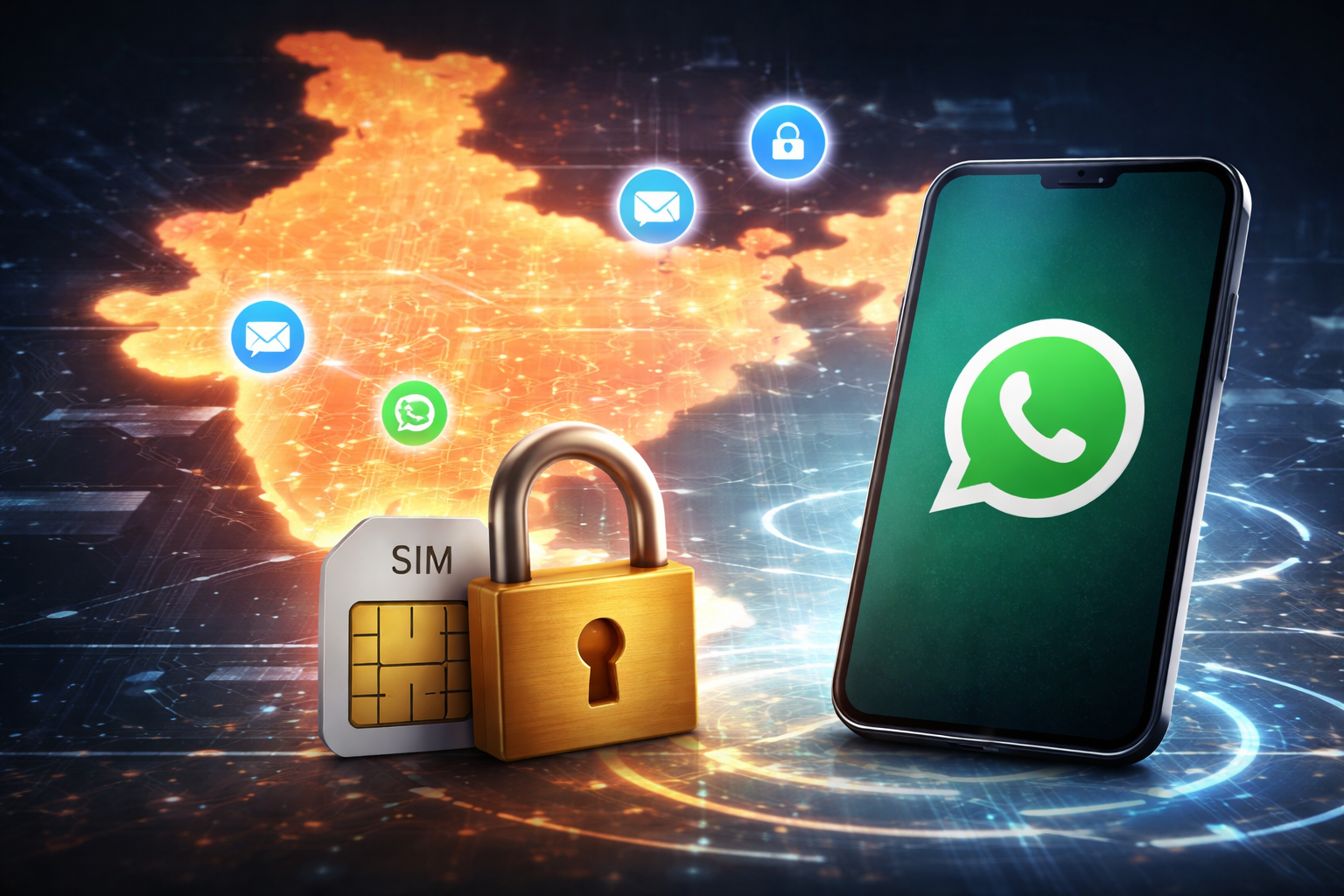
India’s new SIM-binding
requirement for messaging platforms has begun taking effect nationwide
after the compliance deadline passed on February 28, forcing platforms such as
WhatsApp, Telegram and Signal to modify how user accounts operate across
devices. The regulation, introduced by the Department of Telecommunications
(DoT), came into force on March 1 under updated telecom cybersecurity rules,
marking one of the most significant changes to how messaging services function
in the country.
The rule
requires messaging applications that rely on mobile numbers for registration to
ensure that each account remains tied to the active, KYC-verified SIM card
physically present in the user’s primary smartphone. If the SIM card
associated with the account is removed, replaced or deactivated, access to the
messaging service may be interrupted until the original SIM is verified again.
Officials say the measure is intended to strengthen digital traceability and reduce the misuse of messaging platforms in cybercrime schemes, including impersonation scams and financial fraud.
Messaging
Platforms Begin Adapting Systems
Since the
regulation took effect earlier this month, messaging platforms have started
adjusting authentication mechanisms to comply with the requirement. The rule
applies broadly to communication services that use mobile numbers as primary
identifiers, including WhatsApp, Telegram, Signal and similar over-the-top
messaging apps.
The new
framework shifts messaging services from a “verify once” system to
continuous verification, requiring platforms to periodically confirm that
the SIM card used to register the account remains active in the device.
This means the traditional model, where a user verifies their phone number once using a one-time password and can later remove the SIM card without affecting the account, no longer fully applies in India. Under the updated rules, messaging services must maintain an ongoing link between the user account and the physical SIM.
Multi-Device
Messaging Faces New Restrictions
The
regulation is expected to affect how millions of Indians use messaging services
across multiple devices.
Features
such as WhatsApp Web, desktop versions of Telegram, or linked devices on
tablets and secondary phones may now require more frequent authentication
through the primary phone where the registered SIM card is installed.
In some
implementations being tested by platforms, web sessions may automatically log
out periodically, requiring users to reconnect through their smartphone. The
approach is designed to ensure that accounts remain tied to a verified telecom
identity.
Technology analysts say the rule could particularly affect professionals and businesses that rely heavily on messaging apps for communication across multiple devices.
Government
Links Policy to Rising Cybercrime
Indian
authorities have repeatedly linked the SIM-binding mandate to the country’s
growing problem of cyber fraud.
Investigators
say criminal groups often verify messaging accounts using legitimate mobile
numbers and then operate them remotely after removing or duplicating the SIM
card, making it difficult for law-enforcement agencies to trace activity.
By ensuring
that each active account remains tied to a live telecom identity,
regulators hope to reduce the misuse of messaging platforms in scams and
digital impersonation schemes.
Government officials have described the rule as an important step toward strengthening India’s digital communication infrastructure and improving accountability in online interactions.
Industry
and Privacy Concerns
While the
government argues that SIM binding will help combat fraud, the policy has also
triggered debate among technology experts and digital rights groups.
Some
analysts warn that strict SIM-verification requirements could disrupt
legitimate use cases, particularly for users who frequently switch devices or
rely on messaging apps during international travel.
Others say
the rule could create operational challenges for companies that must redesign
authentication systems across multiple platforms in a relatively short
timeframe.
Industry observers have also pointed out that India’s messaging ecosystem is among the largest in the world, meaning regulatory changes can affect hundreds of millions of users.
Compliance
Reporting Deadline Approaches
Under the
telecom directive issued late last year, messaging platforms were given 90
days to implement the new system before the regulation came into force.
Companies
are now expected to submit compliance reports to telecom authorities later this
month detailing how their systems align with the new requirements.
Regulators have indicated that enforcement could tighten if platforms fail to demonstrate adequate implementation of the rule.
Broader
Shift in Digital Governance
The
SIM-binding rule is part of a wider effort by the Indian government to
strengthen cybersecurity within the country’s telecommunications and digital
communication ecosystem.
India has
previously introduced stricter telecom identity verification requirements,
including mandatory KYC procedures for SIM cards and tighter oversight of
telecom operators.
Analysts say the latest measure reflects a broader policy direction in which digital identity and telecom identity are becoming increasingly interconnected in the country’s regulatory framework.
What It
Means for Users
For most
users, the practical impact of the change will be limited as long as the registered
SIM card remains active in their primary phone. However, people who
frequently remove their SIM cards, switch devices, or rely heavily on web
versions of messaging apps may notice additional verification prompts.
Experts advise users to ensure their messaging apps are updated and that the phone number registered on their account matches the SIM currently installed in their primary smartphone.
Outlook
India’s
SIM-binding policy represents one of the most significant regulatory changes
affecting messaging platforms in recent years.
As companies
continue adjusting their systems and regulators monitor compliance, the rule is
likely to reshape how messaging services operate in one of the world’s largest
digital communication markets.
Whether the
measure ultimately succeeds in reducing cyber fraud without significantly
disrupting everyday communication will become clearer in the months ahead as
the new system stabilizes across India’s messaging ecosystem.

.jpg)

Comments
Loading comments...
Leave a Comment