
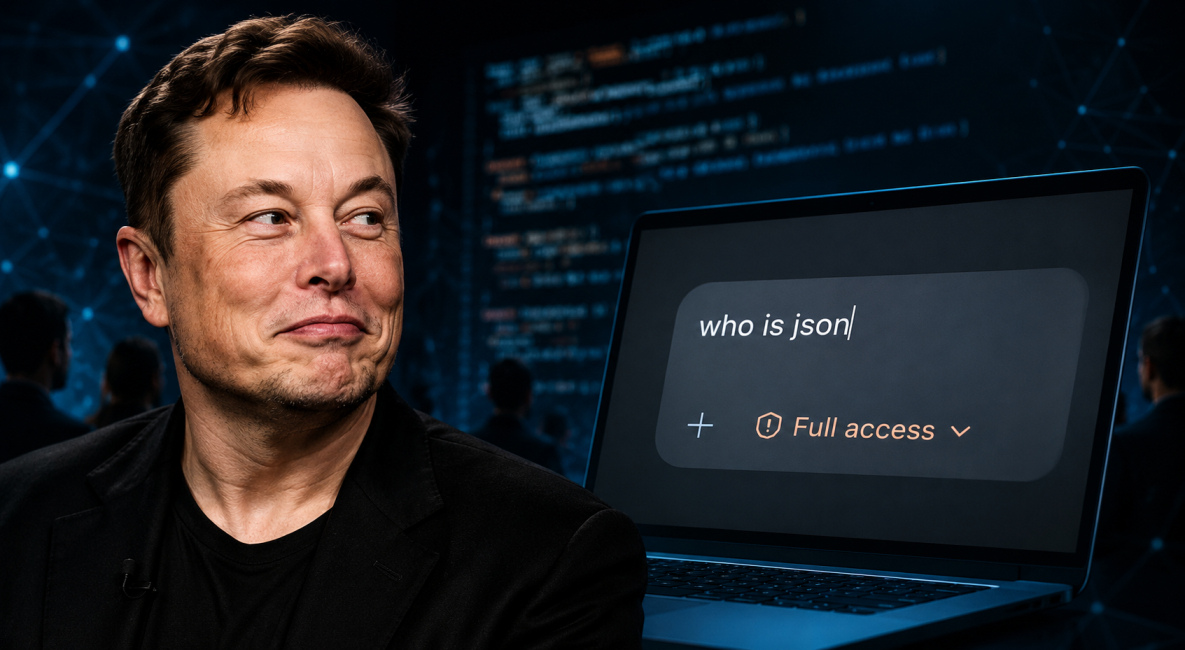
A lighthearted social media post mocking the growing trend of AI-assisted coding has sparked widespread discussion across the technology world after receiving attention from Elon Musk and triggering an unexpected cryptocurrency frenzy.
The viral
meme, shared by engineer Kanav on June 20, humorously illustrated a scenario in
which a developer grants an artificial intelligence system complete access to
build software, only to later ask a basic question: “Who is JSON?” The post
humorously drew attention to a trend where AI tools are handling more
programming tasks, leaving some users less engaged with the underlying
mechanics of software development.
The post
quickly gained traction among programmers and technology enthusiasts, many of
whom viewed it as a playful critique of a growing development trend known as
“vibecoding.” The term describes a style of software creation where developers
communicate ideas in plain language and allow AI systems to generate much of
the code automatically.
The
discussion intensified after Elon Musk reacted to the meme on social media.
Musk responded with the phrase “Full access” alongside a laughing emoji, a
brief comment that rapidly amplified the post's visibility across online
platforms.
Following
Musk’s interaction, engagement surged dramatically. The meme accumulated tens
of thousands of likes, shares and comments as users debated the advantages and
risks of increasingly automated software development.
The online
attention soon spilled into the cryptocurrency sector. A Solana-based memecoin
inspired by the “JSON” joke appeared shortly after the post gained momentum.
The token experienced a sharp increase in activity as traders rushed to
capitalize on the viral moment, pushing its market value significantly higher
within a short period.
While the
cryptocurrency excitement attracted headlines, much of the conversation
remained focused on the broader implications of AI-generated software
development.
Vibecoding
has become one of the most discussed trends in the technology industry since
advances in generative AI made it possible for users to build applications
through natural language instructions. Modern AI coding assistants can write,
debug and modify software with minimal manual input, enabling both experienced
developers and newcomers to create projects more quickly than ever before.
Supporters
argue that the approach lowers technical barriers and accelerates innovation by
allowing developers to focus on ideas rather than syntax. AI-powered coding
tools can rapidly generate prototypes, automate repetitive tasks and help teams
deliver products faster.
However,
critics warn that excessive reliance on AI-generated code may create knowledge
gaps, especially when users deploy software without understanding how the
underlying systems function. Technologies like JSON continue to play a key role
in software development, serving as one of the standard methods applications
use to exchange and organize data.
The viral
meme resonated because it captured a growing concern within the industry:
whether developers can safely rely on AI tools without maintaining a strong
grasp of programming fundamentals.
Many
organizations adopting AI coding assistants are now emphasizing oversight and
review processes.Many organizations are introducing additional review layers,
where AI-generated code is checked and refined by developers before being used
in real-world applications.
The incident
highlights how AI is reshaping software development culture while also creating
new debates about skills, education and responsibility. What began as a simple
internet joke has evolved into a broader conversation about the future
relationship between programmers and artificial intelligence.
As AI coding
tools continue to become more powerful, the balance between automation and
technical understanding is likely to remain a central topic across the
technology industry.

.jpg)

Comments
Loading comments...
Leave a Comment