
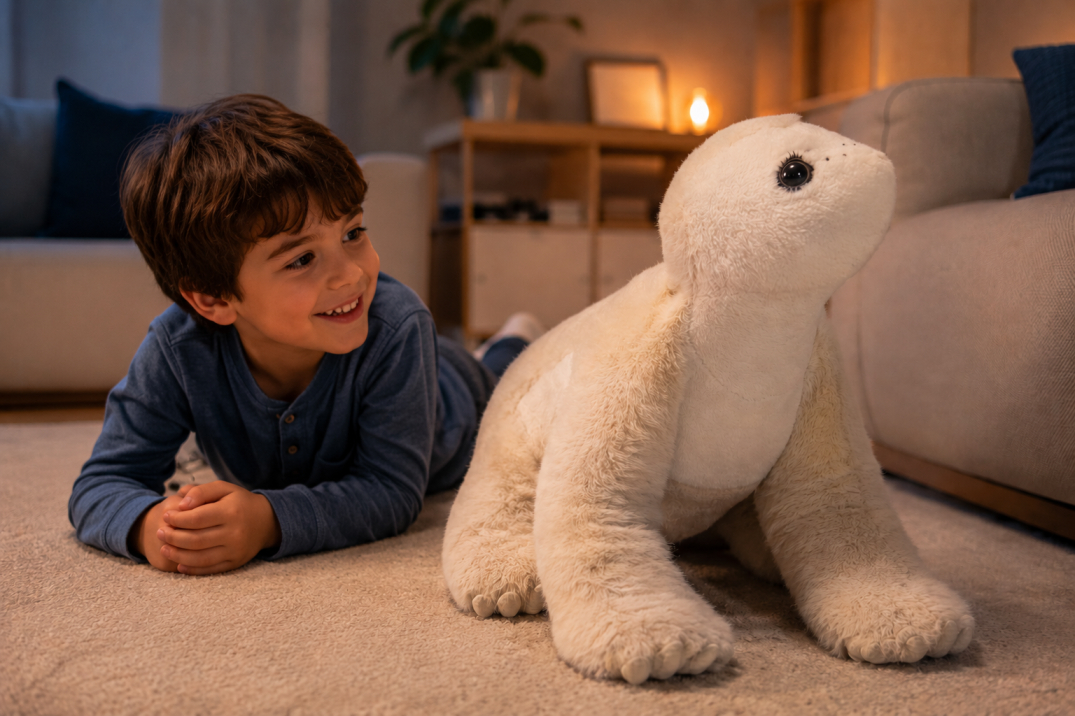
A new AI-powered robotic companion called Familiar is drawing attention in the consumer technology space, offering a different approach to emotional support and daily interaction through artificial intelligence.
The device, introduced by the inventor of the Roomba
robotic vacuum system, is designed as a soft, interactive robotic pet capable
of adapting to user routines and responding to household behavior patterns.
Unlike traditional home robots focused on utility
tasks, Familiar is positioned as a companion-oriented system built around
emotional interaction, habit reinforcement, and presence within daily life.
A Shift Beyond Functional Robotics
Consumer robotics has historically focused on
automation and convenience, with products designed to handle repetitive
household tasks such as cleaning or monitoring.
Familiar reflects a broader shift toward emotionally
responsive technology, where AI systems are increasingly designed to interact
with users in more personal and behavioral ways.
The robotic companion features a soft exterior and
animal-inspired design intended to create a sense of comfort and familiarity
within home environments.
According to information released alongside the
announcement, the system is built to learn routines over time and respond to
user activity patterns.
Designed Around Daily Interaction
The device is intended to function as a constant
in-home presence rather than a task-oriented assistant.
Familiar is designed to recognize patterns within
household activity and respond through subtle physical interactions. These
include actions such as gentle nudges, movement prompts, and small behavioral
responses intended to encourage routines and reduce passive digital behavior.
The system is also designed to adapt gradually based
on user habits, creating interactions that evolve over time rather than
remaining static.
This approach reflects a growing trend in AI
development where personalization and behavioral responsiveness are becoming
central design priorities.
Growing Interest in AI Companionship
The launch comes amid increasing global interest in
AI-powered companion systems.
As artificial intelligence becomes more integrated
into daily life, companies are exploring products that move beyond productivity
and utility into emotional and social interaction.
The demand for companion-oriented technology has grown
steadily in recent years, particularly among individuals seeking emotional
support, routine assistance, or low-maintenance alternatives to traditional
pets.
Familiar appears to target multiple user groups,
including people unable to keep pets, users interested in emotional support
systems, and households looking for interactive AI experiences.
Technology Meets Behavioral Design
One of the defining features of Familiar is its
emphasis on behavioral reinforcement.
Instead of functioning purely as entertainment, the
system is designed to encourage routines and create subtle interruptions to
repetitive habits such as prolonged screen usage or inactivity.
The robot reportedly uses adaptive learning systems to
understand recurring behaviors and respond in context-aware ways.
This reflects a broader movement within consumer AI
products toward integrating behavioral science into product design.
Questions Around Emotional AI
The rise of emotionally interactive AI systems is also
prompting broader discussions about the relationship between humans and
machines.
As AI companions become more realistic and responsive,
questions are emerging around emotional dependency, attachment, and the role of
artificial systems in personal well-being.
The growing popularity of AI companions reflects
changing attitudes toward technology, particularly as digital interaction
becomes increasingly normalized across social and personal environments.
At the same time, developers continue exploring how
far emotional interaction with AI can or should evolve.
Market Availability Still Unclear
While Familiar has generated significant attention
online following its unveiling, reports indicate that the product may still be
some time away from commercial availability.
The company has not yet confirmed a final launch
timeline or large-scale production schedule.
This suggests the project may still be in an early
development or testing phase before broader consumer rollout.
Despite this, early visibility around the product
highlights growing public interest in AI systems designed for companionship
rather than productivity alone.
Expanding AI Consumer Ecosystem
The introduction of Familiar reflects a larger
expansion of AI-powered consumer products entering everyday environments.
Artificial intelligence is increasingly being
integrated into:
- Smart home systems
- Wearable devices
- Health and wellness products
- Interactive assistants
- Social robotics
The focus is gradually shifting from purely functional
automation toward systems capable of ongoing interaction and personalization.
Emotional Technology as Emerging Category
The emergence of AI companion products points toward a
growing category often referred to as emotional technology.
Rather than replacing human relationships, these
systems are being positioned as supplemental support tools that provide
interaction, reminders, and behavioral engagement within home settings.
This category is expected to expand further as
advances in machine learning, natural language interaction, and adaptive
behavior systems continue to evolve.
Outlook
Familiar represents another step in the evolution of
AI-driven consumer technology, where emotional interaction and behavioral
awareness are becoming as important as functional capability.
The product reflects changing expectations around how
technology fits into daily life, particularly as users increasingly seek
systems that feel more responsive, adaptive, and personal.
While the long-term commercial impact of AI companion
robots remains uncertain, the growing interest surrounding Familiar highlights
a broader shift in the technology industry—one where artificial intelligence is
no longer limited to productivity and automation, but is increasingly entering
spaces tied to emotion, routine, and everyday companionship.

.jpg)

Comments
Loading comments...
Leave a Comment