
In the
high-stakes arena of sports marketing, Coca-Cola is shifting the goalposts.
With the World Cup less than three months away, Coca-Cola North America has
unveiled the finer details of its partnership with sports memorabilia giant Panini
America.
This isn't
just another sponsorship; it is a calculated move to bridge the gap between a
global beverage brand and a "sacred" soccer tradition that dates back
more than 50 years.
According to
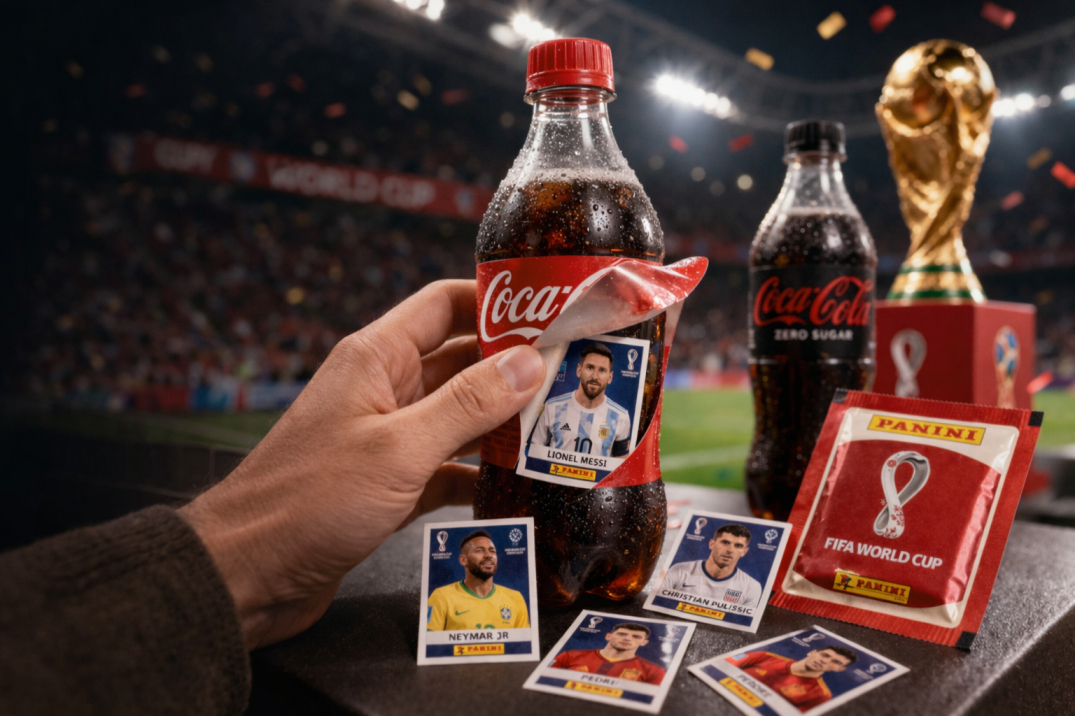
information shared with Marketing Dive, Coca-Cola is turning its physical
packaging into a primary marketing channel. Fans will find Panini’s collectible
FIFA stickers directly behind the labels of 20-ounce Coke and Coke Zero
Sugar bottles.
By hiding
the collectible, Coca-Cola transforms a routine purchase into an
"unboxing" experience. In an era where conventional advertising can
often feel "cringe" or intrusive, this strategy thrives on curiosity
and gamified engagement.
Industry
analysts say the move reflects a broader shift in brand strategy, where
companies are increasingly embedding experiences directly into products rather
than relying solely on digital or broadcast advertising. By integrating
collectibles into packaging, Coca-Cola is effectively turning every bottle into
a point of interaction.
Tapping
into a 50-Year Ritual
The
collaboration taps into a long-running soccer ritual first introduced during
the 1970 World Cup. For decades, fans have filled booklets with stickers
capturing the iconography, teams, and star players of each tournament.
Shakir Moin,
Chief Marketing Officer of Coca-Cola North America, explains that while this is
a nostalgic ritual for veteran fans, it represents a massive opportunity for hyper-personalization
among newer audiences. It allows them to forge deep, personal connections with
players, one sticker at a time.
Marketing
experts note that the emotional value of collectibles, especially those tied to
global events like the FIFA World Cup, can significantly enhance brand recall
and customer loyalty. By associating itself with a long-standing fan tradition,
Coca-Cola is positioning its product within a cultural experience rather than a
standalone purchase.
Why This
Works: Prception Medialab Analysis
At Prception
Medialab, we analyze global moves like this to find the "disruptive"
edge for our own clients. Here is why the Coca-Cola x Panini partnership is a
gold standard for modern branding:
- Minimalist Integration: The marketing isn't cluttering
the design; it is the design. By placing the value behind the label, they
maintain a sleek, minimal aesthetic while maximizing the
"reveal" factor.
- The Power of Ritual: Instead of forcing a new
behavior, Coke is inserting itself into a behavior fans already love. This
is the ultimate form of "non-ad" marketing.
- Physical Connectivity: In a digital-first world,
providing a tactile, physical collectible creates a lasting brand
impression that a social media banner simply cannot match.
Beyond these
factors, analysts also highlight the campaign’s scalability. With millions of
bottles distributed across retail networks, the initiative has the potential to
reach a massive audience without relying on additional media spend. Each
purchase becomes both a transaction and an experience.
A Shift
Toward Experiential Packaging
The campaign
also underscores a growing trend in the consumer goods sector: the use of
packaging as an experiential marketing tool. Rather than treating packaging as
a passive element, brands are increasingly turning it into an active engagement
channel.
Experts say
this approach is particularly effective among younger consumers, who are more
likely to engage with interactive or collectible-driven campaigns. The
integration of gamification elements, such as surprise reveals, adds an
additional layer of excitement that traditional advertising formats often lack.
In this
case, Coca-Cola’s strategy leverages both nostalgia and novelty. While older
fans recognize the cultural significance of Panini stickers, younger audiences
are introduced to the tradition through a modern, product-based interaction.
Competitive
Timing Ahead of the World Cup
The timing
of the campaign is also strategic. With global attention set to intensify as
the World Cup approaches, brands are competing aggressively for visibility and
consumer engagement.
Instead of
relying heavily on high-cost advertising slots, Coca-Cola appears to be
focusing on sustained, everyday interaction with consumers. By embedding the
campaign into retail products, the company ensures repeated engagement leading
up to the tournament.
Marketing
analysts suggest that such approaches may offer higher long-term value compared
to short-lived advertising bursts, particularly in a fragmented media
environment where audience attention is increasingly difficult to capture.
The
Bottom Line for Brands
Coca-Cola’s
CMO is sending a clear message: Connection is more valuable than reach.
While competitors spend millions on 30-second TV spots, Coca-Cola is focusing
on the hands of the consumers.
The lesson
for any brand, whether in EdTech, skill development, or retail, is to identify
the existing "rituals" of your audience. Don't just talk to your
customers; give them a piece of the story to hold onto.
As brands
continue to navigate an evolving marketing landscape, campaigns like this
highlight a key shift: the most effective strategies are no longer about
interruption, but integration. By embedding itself into a long-standing fan
ritual, Coca-Cola is not just advertising, it is participating in the
experience.

.jpg)
.png)
Comments
Loading comments...
Leave a Comment