
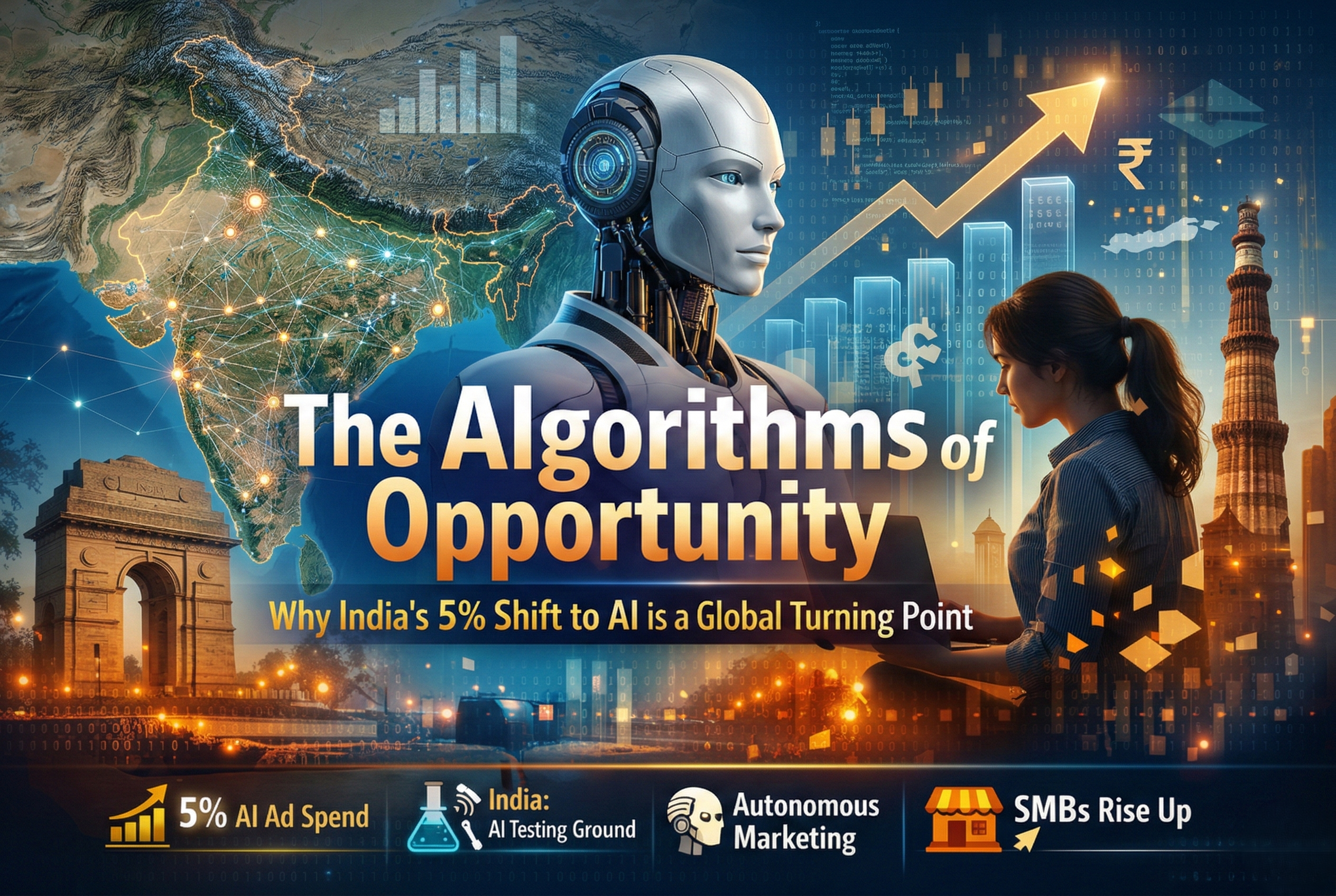
We are living through a moment of profound transformation. For the last decade, the story of India’s digital economy has been defined by access-connecting a billion people, making data affordable, and putting a smartphone in every hand. It was a phase of building infrastructure. Now, we are seeing the next chapter unfold: the shift from connection to intelligence.
A compelling new projection by digital marketing authority Neil Patel has brought this shift into sharp focus. During a recent visit to India, Patel noted that within the next two years, AI-powered platforms could account for nearly 5% of India’s total advertising expenditure (AdEx).
While a single-digit figure might initially seem modest, in an economy of India’s scale and velocity, this is not just a statistic. It is a massive structural signal. It represents a transition where artificial intelligence graduates from being a helpful "co-pilot" to becoming the central architect of the digital marketplace.
The Scale of the Indian Dataset
To understand why this 5% shift is so significant, one must look at the unique nature of India’s internet ecosystem. AI, at its core, is a learning machine. It thrives on data, patterns, and complexity.
India offers a digital landscape unlike any other. It is a market of unparalleled diversity, with hundreds of millions of users interacting in dozens of languages, across varying connectivity speeds and devices. Every search, every video view, and every digital transaction creates a signal. When you aggregate these billions of daily signals, you create a training ground for AI that is incredibly robust.
As Patel observes, this scale is precisely what makes India fertile ground for AI-driven innovation. In this environment, algorithms can test hypotheses and refine strategies at a speed that human intuition simply cannot match. If an AI model can learn to navigate the linguistic and cultural nuances of the Indian consumer effectively-understanding the difference between a query in Malayalam versus one in Marathi-it is ready to succeed anywhere. This is why we see India not just as a market for these tools, but as a global laboratory where the future of marketing intelligence is being refined.
From Automation to Autonomy
The transition we are witnessing is subtle but critical. For years, "ad-tech" meant automation-software that helped marketers bid on keywords or schedule posts more efficiently. However, the new wave of AI adoption goes far beyond these incremental upgrades. We are moving from automated systems to autonomous ones.
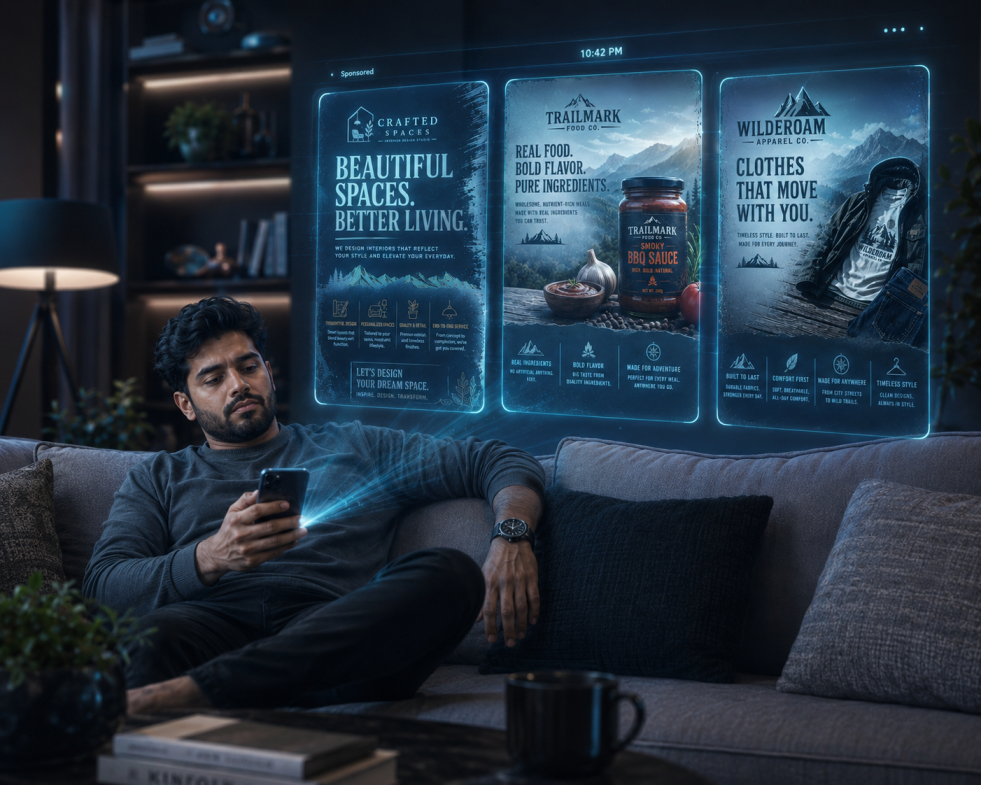
The future lies in autonomous marketing ecosystems-platforms capable of handling entire campaign lifecycles. Imagine a system that doesn't just wait for a weekly review to optimize a budget, but one that adjusts in real-time, millisecond by millisecond. These AI agents can generate ad creatives on the fly, tailor messaging for micro-audiences, and reallocate capital to the highest-performing channels instantly.
This shift dramatically reduces the friction of growth. It eliminates the "waste" in advertising spend that has historically plagued businesses. If AI platforms capture 5% of the market, it validates that advertisers-from large conglomerates to local startups-are learning to trust machine-driven decision-making for critical business outcomes.
Democratizing Success for SMBs
Perhaps the most optimistic aspect of this shift is what it means for the small and medium business (SMB) sector. Historically, sophisticated marketing was the domain of large corporations with deep pockets. They were the only ones who could afford the data analysts, the strategists, and the creative agencies required to optimize complex campaigns.
AI changes that equation. It democratizes intelligence.
When an advertising platform is powered by advanced AI, a local artisan in Jaipur or a textile manufacturer in Surat doesn’t need to be a data scientist to find their customers. The AI handles the complexity on the back end. It finds the audience, optimizes the creative, and ensures the budget is spent efficiently. This leveling of the playing field is vital for India’s economic growth. When small businesses have access to the same powerful tools as large enterprises, innovation flourishes, and the economy becomes more resilient. We are moving toward a future where the size of your idea matters more than the size of your budget.
The Human-AI Partnership
As we embrace these advancements, it is natural to ask where humans fit into this loop. The rise of autonomous marketing does not signal the end of the marketer; rather, it signals the evolution of their role.
Advertising, at its heart, is about storytelling. It is about empathy, emotion, and connecting with shared human experiences. While AI is exceptional at optimization and pattern recognition, it cannot replicate the spark of human creativity or the nuance of brand strategy.
The most successful agencies of the future will be those that adopt a hybrid model. They will use AI to handle the "science" of advertising-the data crunching and targeting-while freeing up their teams to focus on the "art"-the narrative, the ethics, and the big-picture strategy. This partnership between human ingenuity and machine efficiency is where the real magic happens.
Innovation with Responsibility
Furthermore, as these systems handle more data, our commitment to responsibility must grow stronger. The transition to AI-driven advertising brings valid questions about privacy and transparency.
As AI systems become more integrated into our digital lives, earning and keeping user trust is paramount. Innovation cannot come at the cost of user privacy. The industry must work together to ensure that these autonomous systems are built with safety guardrails, ensuring that data is used ethically and that consumers remain in control of their digital experiences.
Looking Ahead
The next two years will be a defining period. If India’s ad industry migrates 5% of its spend to AI-native platforms, it will prove that the technology has moved beyond the experimental phase and into the mainstream.
India is uniquely positioned to lead this charge. The combination of a young, tech-savvy population, a rapidly digitizing economy, and a deep talent pool of developers and marketers creates a perfect storm for innovation. We are optimistic that the models and strategies forged here-in the complexity of the Indian market-will eventually serve as a blueprint for the rest of the world.
The future of advertising isn't just about selling products; it is about helpfulness. It is about connecting people with the things they need,
at the moment they need them, with privacy and relevance. As India marches toward this AI-driven horizon, it is setting the pace for a smarter, more inclusive global digital economy.

.jpg)
.png)
Comments
Loading comments...
Leave a Comment