
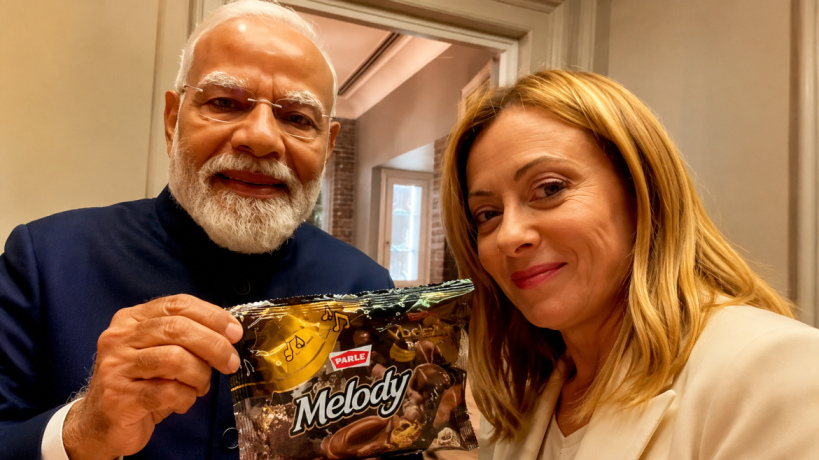
A simple
packet of Melody toffee gifted by Indian Prime Minister Narendra Modi to
Italian Prime Minister Giorgia Meloni has unexpectedly become one of India’s
biggest viral marketing moments of the year, sending social media into frenzy
and pushing the decades-old candy brand back into the center of public
conversation.
The
now-viral moment unfolded during PM Modi’s visit to Italy, where he presented
Meloni with a packet of Parle Melody toffee, a playful reference to the
internet nickname “Melodi,” a combination of Modi and Meloni that has
circulated online for months. Videos and images of the interaction rapidly
spread across X, Instagram, YouTube, and news platforms, generating millions of
views within hours.
The viral
reaction immediately triggered a massive spike in online searches related to
Melody and Parle products, with terms such as “Melody chocolate,” “Parle
Melody,” and even “Parle share price” trending across Google and social media
platforms.
In a
surprising twist, investor excitement surrounding the viral moment even pushed
shares of unrelated company Parle Industries sharply upward after many users
mistakenly connected the stock to the Melody brand.
Viral
Culture Turns a Simple Candy Into a Global Branding Moment
The Melody
moment quickly evolved beyond diplomacy and became a case study in how internet
culture can transform ordinary products into massive marketing phenomena
overnight.
Parle did
not launch a global campaign, celebrity endorsement, or expensive digital
activation around the event. Instead, the brand benefited from what marketers
increasingly describe as “organic cultural amplification”, where public
participation, memes, and online conversation generate visibility far beyond
traditional advertising.
Within hours
of the video appearing online, meme pages, creators, influencers, and news
platforms began reposting clips and parody content surrounding the “Melodi”
joke.
The
situation demonstrates how modern branding increasingly depends on shareability
rather than direct advertising alone.
In today’s
algorithm-driven digital environment, emotionally engaging moments often spread
faster than carefully planned campaigns. The Melody clip worked because it
combined politics, humor, nostalgia, internet culture, and a recognizable
Indian brand into one instantly memeable moment.
The internet
reaction also highlighted the emotional power of nostalgic products in modern
marketing.
Melody has
existed in India for decades and carries strong childhood familiarity for
millions of consumers. The unexpected appearance of the candy in an
international diplomatic setting created a mix of humor, national pride, and
nostalgia that fueled massive engagement online.
Parle
Products later acknowledged the viral attention publicly, thanking PM Modi for
taking Melody “to the global stage.”
Attention
Economy Continues Reshaping Brand Visibility
The incident
also reflects a larger shift happening across modern marketing, where brands
increasingly gain visibility through cultural moments rather than traditional
advertising campaigns.
Today,
audiences actively participate in brand storytelling through memes, reposts,
reactions, parody edits, and social commentary. In many cases, internet users
themselves become the marketing engine.
The Melody
moment demonstrates how quickly digital culture can amplify even the simplest
brand appearance into a nationwide conversation.
The virality
surrounding the toffee also reinforced a growing reality inside modern
branding: attention itself has become one of the most valuable forms of
marketing currency online.
Whether
driven by humor, nostalgia, politics, or internet trends, moments that generate
conversation often deliver more visibility than expensive advertising campaigns
struggling for audience attention.
For Parle,
the Melody moment may ultimately become more than a viral trend.
It has
turned a decades-old candy into a globally recognized internet symbol overnight,
proving once again that in today’s digital economy, one authentic cultural
moment can sometimes achieve what years of traditional marketing cannot.
.jpg)
.jpg)
.jpg)
Comments
Loading comments...
Leave a Comment