
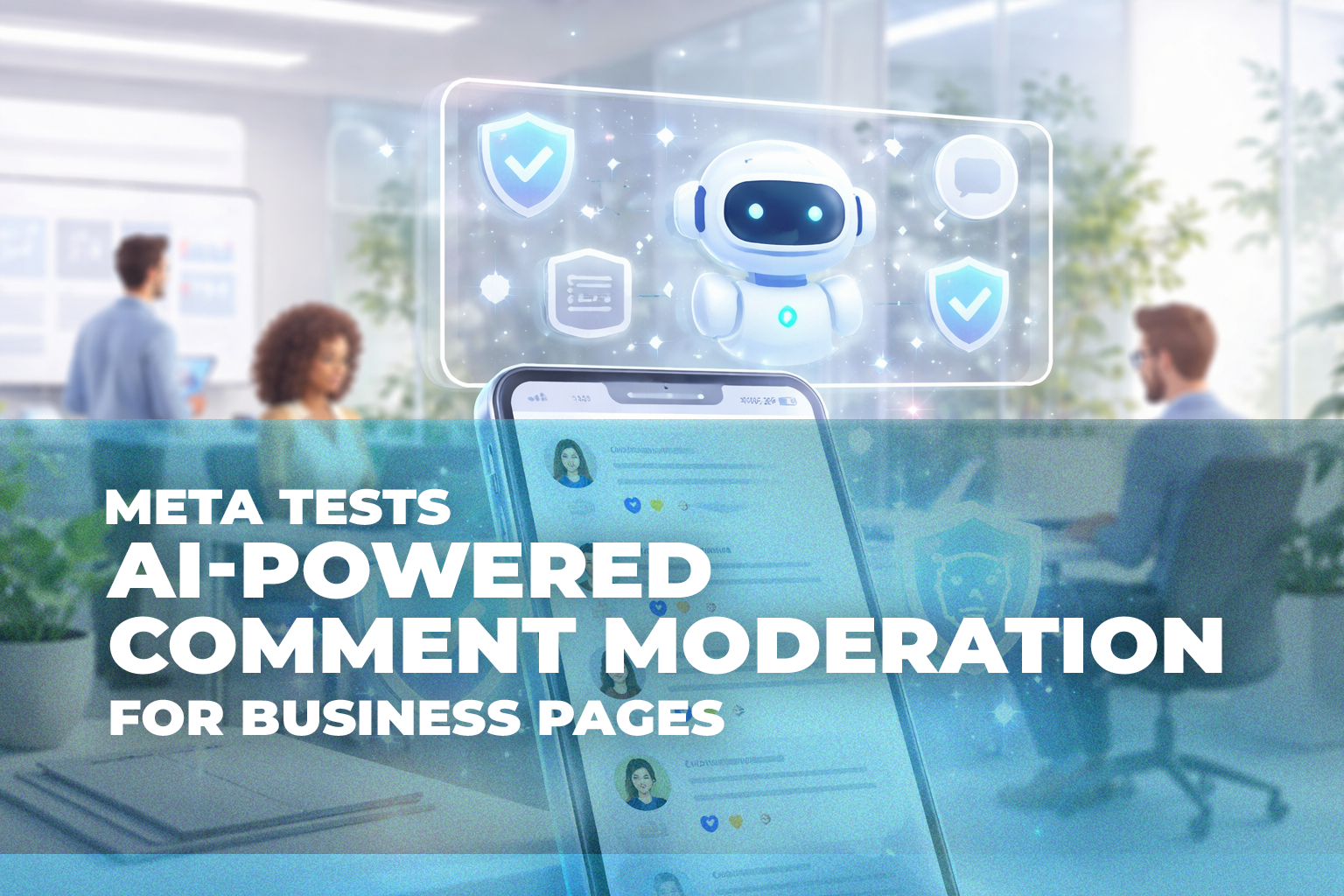
Meta
Platforms Inc. has begun testing a new artificial intelligence-powered comment
moderation system for business pages on Facebook and Instagram, expanding its
use of automation in platform governance as brands grapple with rising
engagement volumes and reputational risk.
The pilot
program, outlined in a recent platform update, allows a limited group of
business accounts to automatically detect, filter, and prioritize comments
using AI-based contextual analysis. The initiative reflects Meta’s broader push
to integrate artificial intelligence more deeply into business-facing tools
while responding to mounting advertiser concerns over brand safety.
Under the
test, the system evaluates incoming comments for spam, abusive language,
coordinated inauthentic behavior, misleading promotional links, and off-topic
interactions. It also identifies comments that signal potential purchase intent
or customer service inquiries, enabling faster response from page
administrators.
A Meta
spokesperson said the tool is designed to help businesses maintain productive
conversations while reducing the operational burden of manual moderation,
particularly during high-traffic campaigns.
Escalating
Engagement, Escalating Risk
Business
pages across Meta’s platforms have experienced sustained increases in user
interaction, fueled by short-form video formats, live broadcasts, and
performance-driven advertising. While higher engagement boosts visibility
within Meta’s ranking systems, it also increases exposure to disruptive or
harmful commentary.
Digital
marketing analysts note that viral posts often attract spam bots, automated
phishing links, impersonation attempts, and coordinated trolling campaigns. For
small and mid-sized enterprises, maintaining constant oversight of comment
threads can strain limited resources.
The AI
system operates as a preliminary review layer. High-risk comments may be
automatically hidden pending review, while ambiguous cases are flagged for
manual assessment. Businesses retain ultimate authority over moderation
decisions.
Meta has not
disclosed how many companies are participating in the pilot but said the test
includes businesses across multiple industries and regions.
From
Keyword Filters to Contextual Analysis
Traditional
moderation tools have largely relied on static keyword filters. Such systems
can block explicit language but often fail to interpret tone, sarcasm, or coded
messaging.
The new
AI-driven model analyzes phrasing patterns, contextual cues, and behavioral
signals. This allows it to detect problematic interactions that do not rely on
obvious trigger words. It can also identify repetitive spam activity or
coordinated comment surges that standard filters may overlook.
Another
feature under evaluation prioritizes comments by engagement value. Messages
that appear to reflect legitimate customer inquiries may be surfaced more
prominently in moderation dashboards, allowing brands to allocate attention
efficiently during high-volume periods.
Participants
in the pilot can customize moderation sensitivity levels depending on their
risk tolerance and engagement strategy.
Regulatory
and Advertiser Pressures
The rollout
comes amid intensified regulatory scrutiny of content governance practices
across major social media platforms. Policymakers in several markets have
called for greater transparency and accountability in moderation systems,
particularly regarding misinformation, harassment, and commercial deception.
For
advertisers, unmanaged comment sections present reputational exposure.
Inappropriate or misleading comments can remain publicly visible for extended
periods, potentially undermining brand credibility.
Automated
moderation tools offer greater consistency in enforcement and record-keeping,
which may assist businesses in demonstrating compliance with evolving platform
and regional standards.
Digital
policy specialists caution, however, that algorithmic moderation must be
carefully calibrated to avoid suppressing legitimate criticism or authentic
customer feedback. Overly aggressive filtering could reduce transparency and
weaken consumer trust.
Meta said
performance metrics from the pilot will include ongoing assessment of accuracy
rates, false positives, and user feedback.
Industry
Reaction
Initial
feedback from participating businesses suggests measurable reductions in manual
moderation time during promotional surges. Some brands reported quicker
identification of spam clusters during flash sales and product launches.
Marketing
consultants observing the test say AI-assisted moderation could significantly
improve operational efficiency, especially for brands managing simultaneous
campaigns across multiple markets.
At the same
time, experts emphasize that automation should complement, not replace, human
judgment. Comment sections often serve as informal customer insight channels,
and excessive filtering may limit valuable dialogue.
Industry analysts argue that the success of such systems will depend on balancing protection with openness, safeguarding conversations without diminishing authentic engagement.
Strategic
Implications
Meta’s pilot
reflects a broader industry shift toward AI-supported governance frameworks. As
interaction volumes scale, manual moderation becomes increasingly difficult to
sustain.
By offering
enhanced moderation tools tailored for business accounts, Meta strengthens its
positioning with advertisers seeking safer engagement environments. The move
also aligns with the company’s broader strategy of embedding artificial
intelligence into advertising, analytics, and user experience infrastructure.
Technology
observers say the integration of AI into comment moderation represents one of
the most sensitive operational areas, given its direct connection to public
discourse and brand reputation.
What
Comes Next
Meta has not
provided a timeline for full deployment but indicated that additional testing
phases are planned through 2026. Insights gathered from the pilot will
determine whether the system expands across global business accounts.
If rolled
out widely, AI-driven moderation could redefine how brands manage digital
communities, shifting toward predictive filtering models supported by human
oversight.
As
artificial intelligence continues to reshape digital operations, governance
tools such as comment moderation are emerging as a critical frontier.
The outcome
of Meta’s experiment may influence how other platforms approach automated
engagement management in the coming years.
For now, the company’s pilot underscores a growing reality within the social media ecosystem: artificial intelligence is no longer limited to content creation and advertising optimization. It is becoming central to how conversations themselves are managed.
.jpg)

.jpg)
.jpg)

Comments
Loading comments...
Leave a Comment