
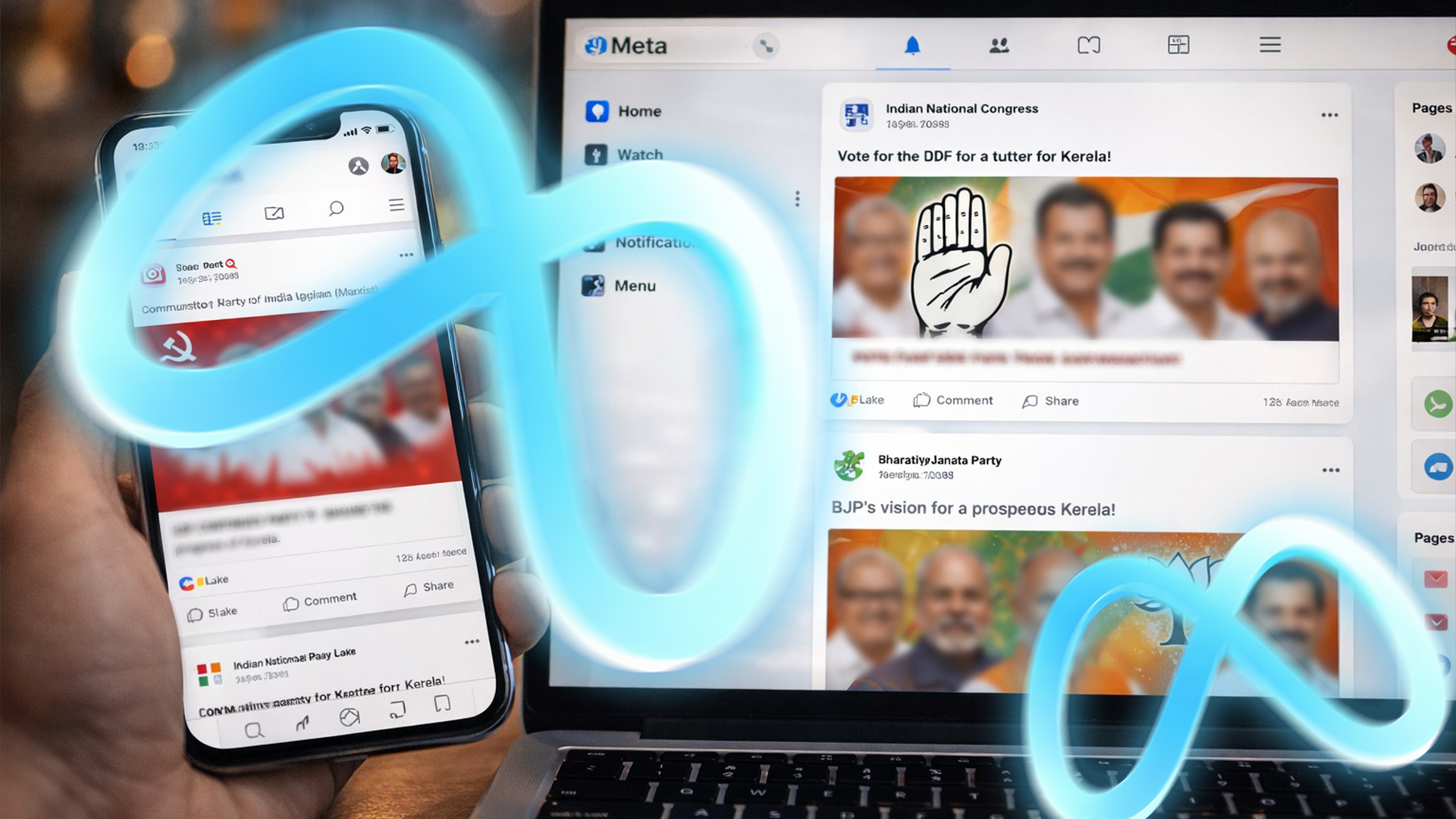
The upcoming assembly elections in Kerala have triggered an unprecedented surge in campaign advertising, with total media spending estimated to cross ₹100 crore, reflecting a highly competitive and multi-platform political outreach strategy.
Political
fronts including the ruling Left Democratic Front (LDF), the Congress-led
United Democratic Front (UDF), and the Bharatiya Janata Party (BJP)-led
National Democratic Alliance (NDA) are competing aggressively across print,
television, radio, outdoor, and digital platforms to maximize voter engagement.
Print
Retains Dominance in Kerala’s Media Mix
Despite the
expansion of digital platforms, print media continues to dominate Kerala’s
election advertising landscape. Industry estimates indicate that nearly 60
percent of campaign spending is directed toward newspapers, a significantly
higher share compared to other regions.
This
dominance is driven by Kerala’s strong readership culture and regulatory
constraints that restrict electronic and digital advertising during the 48-hour
silence period before polling, making print the only viable medium during that
phase.
Political
parties are extensively using full-page advertisements, front-page placements,
and editorial-style formats to communicate achievements, promises, and
comparative narratives.
Digital
Advertising Gains Strategic Importance
While print
leads in scale, digital platforms are emerging as critical tools for targeted
communication.
Data from
advertising transparency platforms highlights a clear disparity in digital
strategies. The BJP has taken a leading position in digital ad spending, with
significant investments on platforms such as Google.
Meta
platform data further reflects this competitive push. Between late March
campaign phases, the Congress-led UDF recorded approximately ₹25.31 lakh in
Meta ad spending in Kerala, followed by the BJP at around ₹19.24 lakh, while
the LDF’s spend remained comparatively lower at about ₹3.96 lakh.
These
figures indicate a growing reliance on social media platforms for targeted
outreach, with campaigns tailored to specific demographics and voter segments.
Diverging
Campaign Approaches Across Parties
Each
political front is adopting distinct advertising strategies to strengthen its
positioning.
The LDF has
focused on incumbency-based messaging, emphasizing governance achievements
through large-scale print ads and prominent outdoor hoardings. Campaign visuals
often highlight development comparisons and continuity themes.
The UDF has
adopted a more cost-efficient and localized approach, combining traditional
messaging with grassroots tactics. Notably, sticker-based campaigns placed in
public spaces are being used as a low-cost yet high-visibility method to
counter larger advertising formats.
The BJP’s
campaign blends national-level branding with regional development narratives.
Its strategy includes high-impact digital campaigns, policy-driven messaging,
and broader audience targeting through online platforms.
Multi-Channel
Strategy Expands Reach
Television
continues to play a significant role in reaching urban audiences, with news
channels reporting increased viewership and higher demand for advertising slots
during the election period. Premium placements are reportedly being secured at
higher costs due to increased competition.
Radio is
being used for high-frequency messaging, particularly during peak listening
hours, while outdoor advertising remains highly visible across highways and
urban centers.
Together,
these channels form a multi-layered communication strategy aimed at maximizing
both reach and frequency across diverse voter groups.
Regulatory
Oversight Tightens
The Election
Commission has implemented stricter regulations to govern political
advertising.
All campaign
advertisements must undergo pre-certification, and restrictions are enforced
during the silence period leading up to polling. Additionally, parties are
required to disclose detailed advertising expenditures, including digital
spending, after the elections.
These
measures aim to improve transparency and accountability, though detailed public
data on spending across media channels remains limited.
Marketing
Perspective: Hybrid Campaign Model Emerges
From a
marketing standpoint, Kerala’s election campaign reflects a hybrid
communication model that combines traditional media dominance with digital
precision.
Print
continues to provide scale and credibility, while digital platforms enable
targeted engagement Television
and radio help strengthen campaign messaging through frequent visibility,
supporting a well-rounded multi-platform approach.
The
increasing role of platforms like Meta also highlights how political campaigns
are shifting toward performance-driven communication, where audience
segmentation and measurable engagement are becoming central to campaign
effectiveness.
Emerging
Opportunities in Campaign Marketing
The scale
and diversity of election advertising in Kerala are creating new opportunities
within the marketing ecosystem.
Key areas of
growth include:
- Data-driven digital advertising
and audience targeting
- Social media campaign
optimization
- Regional and multilingual
content creation
- Outdoor and experiential
campaign formats
- Real-time campaign analytics and
performance tracking
The use of
creative tactics, such as localized sticker campaigns, also highlights the
increasing importance of innovation and cost-efficiency in modern political
communication.
Outlook
Kerala’s
2026 assembly elections are shaping up to be one of the most media-intensive
campaigns in the state’s history.
The
combination of high spending, diverse media strategies, and evolving campaign
techniques underscores the growing importance of marketing in political
outreach.
As digital
platforms continue to expand and traditional media retains its influence,
future campaigns are likely to become more integrated, data-driven, and
competitive.
The current election cycle provides a clear indication of how communication strategies are evolving, where reach, precision, and adaptability are becoming central to influencing voter engagement.
.jpg)
.png)
Comments
Loading comments...
Leave a Comment