
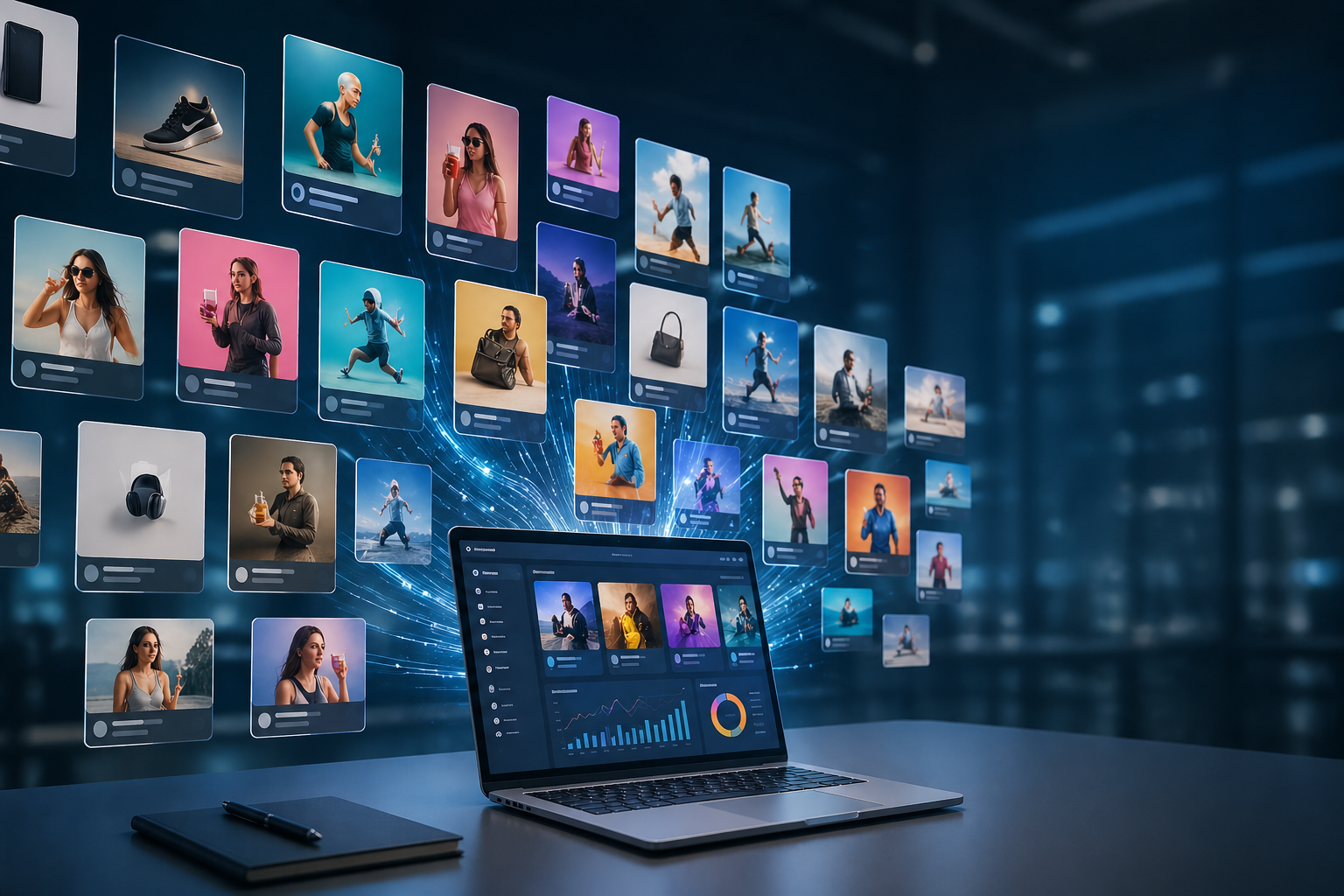
The rapid
adoption of artificial intelligence in digital advertising is reshaping how
brands create, test, and scale campaigns, marking a fundamental shift in the
industry’s creative and operational processes.
Major
platforms such as Meta and TikTok are leading this transformation by
introducing advanced AI tools that can generate ad visuals, write marketing
copy, and produce multiple video variations with minimal human involvement.
These developments are enabling marketers to move beyond traditional creative
limitations and adopt a more data-driven approach to campaign execution.
From
Limited Creatives to Mass Production
Historically,
advertising campaigns were constrained by time, cost, and creative resources,
often resulting in a small number of ad variations. The introduction of
AI-driven tools has significantly changed this dynamic.
Marketers
can now produce dozens or even hundreds of ad variations within minutes,
allowing for broader experimentation and faster optimization. This shift is
enabling real-time testing across formats, audiences, and messaging styles,
fundamentally altering how campaigns are planned and executed.
The emphasis
is gradually moving away from the process of creating individual ads toward
analyzing performance data and refining strategies based on measurable
outcomes.
Automation
Redefines Workflow Efficiency
The
integration of AI into creative workflows is also streamlining production
processes.
Tasks that
once required coordination between designers, copywriters, and editors can now
be handled by automated systems capable of generating complete ad assets. This
reduces turnaround time and allows marketing teams to focus more on strategic
decision-making rather than execution.
For
businesses operating at scale, this efficiency offers a competitive advantage
by enabling faster campaign launches and continuous optimization.
Emerging
Challenge: Creative Saturation
Despite the
efficiency gains, the widespread use of AI-generated creatives has introduced
new challenges.
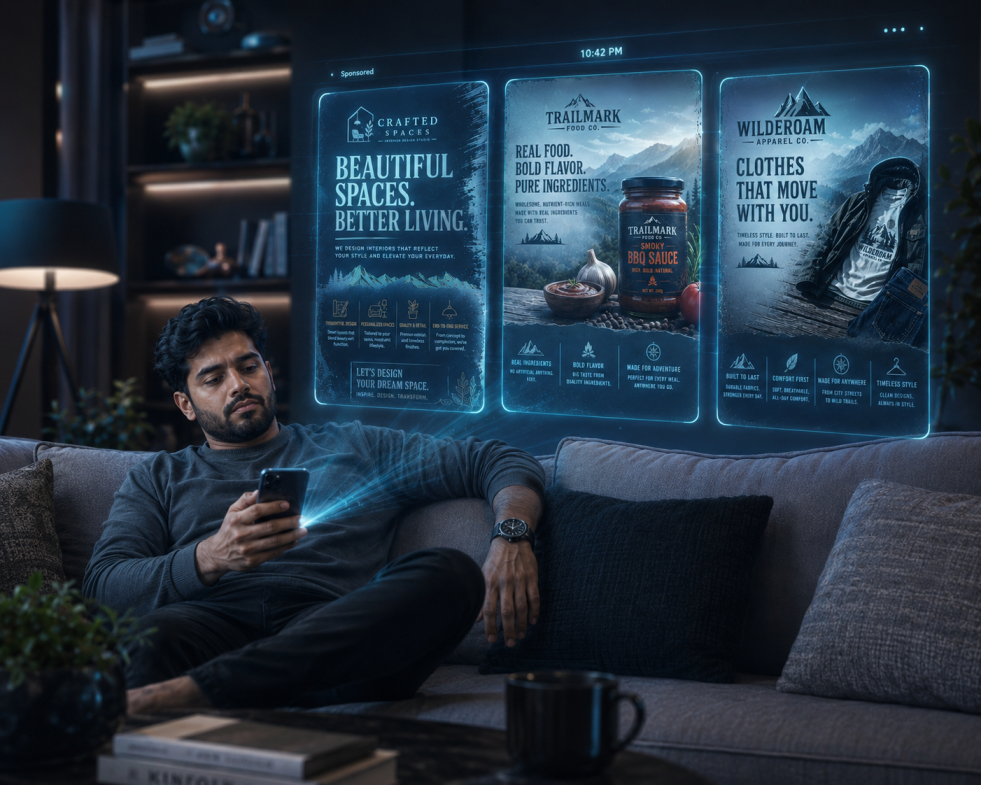
One of the
most significant concerns is creative saturation, where advertisements begin to
appear similar due to reliance on common AI templates and design patterns.
As more
brands adopt the same tools, differentiation becomes increasingly difficult.
This has led to concerns about declining audience engagement, as repetitive
formats can reduce the impact of advertising content.
Early
observations across digital campaigns suggest that this trend may contribute to
rising advertising costs and reduced effectiveness, particularly in highly
competitive markets.
Impact on
Performance Metrics
The growing
volume of AI-generated ads is influencing key performance indicators across the
industry.
Marketers
are reporting fluctuations in metrics such as cost per thousand impressions
(CPM) and click-through rates (CTR), with some campaigns experiencing
diminishing returns due to oversaturation.
While AI
enables rapid production, it also increases competition for audience attention,
making it more challenging for individual ads to stand out.
This has
created a new dynamic where scale alone is no longer sufficient to drive
results.
Creativity
Gains Strategic Importance
As
automation becomes more widespread, creativity is emerging as the primary
factor that differentiates successful campaigns.
With AI
handling production and optimization, the role of human input is shifting
toward conceptual thinking, storytelling, and brand positioning.
Strong
creative ideas are becoming essential for capturing attention and maintaining
engagement in an increasingly crowded digital environment.
The ability
to develop unique and meaningful content is now seen as a key driver of
campaign performance, rather than simply the ability to produce a high volume
of ads.
Hybrid
Approaches Gain Momentum
In response
to these changes, many organizations are adopting hybrid strategies that
combine AI efficiency with human creativity.
AI tools are
being used to generate and test multiple variations, while human teams focus on
developing core concepts and ensuring brand consistency.
This
approach allows companies to benefit from automation without compromising on
originality or quality.
It also
reflects a broader recognition that technology and creativity must work
together to achieve optimal results.
Shifting
Role of Marketing Teams
The rise of
AI-generated creatives is also transforming the roles of marketing
professionals.
Rather than
focusing primarily on production tasks, teams are increasingly responsible for
guiding strategy, interpreting data, and refining messaging.
This shift
requires new skills, including the ability to work with AI tools, analyze
performance metrics, and translate insights into actionable strategies.
As a result,
the marketing function is becoming more analytical and strategic in nature.
Industry-Wide
Transformation Continues
The adoption
of AI in advertising is part of a larger trend toward automation across
industries.
As
technology continues to evolve, AI is expected to play an even greater role in
content creation, audience targeting, and campaign management.
At the same
time, the need for human creativity and strategic thinking is unlikely to
diminish. Instead, these elements are becoming more valuable as automation
levels the playing field.
Outlook:
Balancing Scale and Originality
The rise of
AI-generated advertising marks a new phase in the industry’s evolution,
characterized by speed, scale, and efficiency.
However, the
increasing reliance on automation also highlights the importance of maintaining
creative distinctiveness.
Brands that
can balance the advantages of AI with strong, original ideas are likely to
achieve better outcomes in a competitive market.
As digital
advertising continues to expand, the ability to stand out will depend not just
on technology, but on the quality of the ideas behind it.
The shift underway suggests that while AI may redefine how ads are created, it is creativity that will ultimately determine their success.

.jpg)
.png)
Comments
Loading comments...
Leave a Comment